Harnessing the power of digital and data

You might have noticed the work we've done to improve our digital systems in the last few years, so what's next? Our Deputy Chief Executive, Chris McCann, discusses our digital and data plans.
Close up of a laptop keyboard, keyboard and hand on a mouse

With your help, we have substantially changed our digital systems in the last two years.

Progress so far

With a focus on data security and ensuring that our systems are easy to use, we:

  • We replaced an outdated CRM with a new platform that enables every local Healthwatch to share data with us.
  • Introduced Smart Survey – an enterprise-level tool you can access for free to help with data collection.
  • Upgraded over 100 Drupal websites we provide to local Healthwatch.
  • Revamped our advice and guidance to help you handle your data securely and introduced a new data-sharing agreement.

We have invested significant resources which have had a significant impact. For example, the number of local Healthwatch regularly sharing data with us has more than doubled, from 50 Healthwatch in 2019 to over 120 today.

Where next?

But we can't stand still. To provide you with the best support, we need to innovate and consider rapid advances in digital and data. We also need to make the most of our resources.

This is why we commissioned a specialist digital agency to help shape our digital strategy and sought input from you and various external stakeholders. We also asked several questions in our annual survey of local Healthwatch.

Short-term changes

Thanks to your feedback in our annual survey, we already have several changes in the pipeline:

  • From later this year, you'll be able to access our web form data via the Central Data Store. You'll also be able to access people's contact details if they want to share them.
  • By September, we aim to have every local Healthwatch share their data with us.
  • We'll also make improvements so uploading your data to the central data store is easier.
  • We're also going to improve the network site and look at new systems to make collaborating and finding resources easier. For example, we'll find a new alternative to Workplace.

In the longer term

In the Autumn, we plan to publish our new digital strategy. As well as setting out the near-term steps we will take, our strategy will also:

  • Outline skills required within Healthwatch England to deliver on our vision for digital and data.
  • Deliver the support needed for local Healthwatch, setting out a roadmap of digital delivery and critical milestones.
  • Identify potential uses of emerging technology to support our work.
  • Ensure our systems are user-friendly, sustainable, and resilient.


Have you got a question?

If you have any thoughts or ideas about our digital strategy, please don't hesitate to get in touch via digital@healthwatch.co.uk

Helping us to help you - what the Satisfaction Survey told us

In a new blog, Gavin Macgregor, Head of Network Development, highlights the key findings from our recent Satisfaction Survey and how we're acting on your feedback.

Each year, we ask local Healthwatch to tell us about the support we provide and how we can improve via the Satisfaction Survey.

This year we changed the methodology from asking individual staff, volunteers and board members to asking each Healthwatch to rate our support via one co-ordinated response to get a fuller picture across the network.

Therefore the results of this year’s survey are not directly comparable to previous years’ results. However, we have included last year’s results where the questions were worded in the same way. 

Below we set out what you said and what we’ll be doing.  

Overall findings

Almost all Healthwatch (96%) responded and we were very pleased that 74% of Healthwatch rate our support as positive, with a further 21% having mixed views. 

Overall support to the network


Positive 

74% 


Mixed 

21% 


Negative 

2% 


Don’t know/not sure 

3% 


We appreciate that delivering our support is in the context of Healthwatch under significant financial constraints and increasing demands, including from ourselves, such as the successful introduction of new digital and data systems and processes.

Areas where you noticed improvement included: 


  • People felt webinars, training sessions, toolkits and guidance were better fitted to what they needed and filled gaps. 
  • People felt that communications had improved 
  • People felt that Healthwatch England was becoming more collaborative and listening more to Healthwatch. 
  • People praised individuals/teams/projects, including regional managers, the policy team and the digital and data sharing project 
  • People praised face-to-face meetings and the leadership conference 


Areas for improvement

The survey is our key method for gathering suggestions for improvement from you of course, and there were some common themes to emerge. Some of these suggestions are detailed below, together with how we plan to act on them. 

Theme one

You said:

You want access to a digest of information from our data store which would make requests to share data more meaningful 

We're doing:

  • We will introduce new ways for Healthwatch to compare your local data with other areas  
  • We have introduced a new report on how we have used Healthwatch insight in our national work. The first such report is here. 

Theme two

You said:

Improve communication, two -way dialogue and reduce information overload. 

We're doing:

  • We’ll review our communication channels to ensure consistent messaging and streamline our communications.  
  • We provide Healthwatch with the Look Ahead – what's coming up in the next three months. 
  • We are revamping the network website to make it easier for Healthwatch to always find our key messages.  
  • We use our peer networks (eg Lead Officers, Chairs and Boards and regional meetings) together with Workplace to engage with Healthwatch. 
  • We keep our surveys of the network to twice a year. 

Theme three

You said: 

Better consultation with Healthwatch on our national priorities and longer lead-in times for campaigns and requests to gather data​. 

We're doing: 

  • We’ve set our process for determining our priorities, which includes consideration of the data, reports and priorities of local Healthwatch.  
  • We’ll consider how we can best co-ordinate priority setting with local Healthwatch, including syncing business planning cycles as part of our work on developing the Healthwatch model.  

Theme four

You said: 

More training sessions as some sessions are booked up quickly and more face-to-face training. 

We're doing: 

  • We regularly have no-shows, so we will emphasise the importance of cancellation and consider when reviewing our digital systems.  
  • We’ll review popular sessions and consider within constraints of budget and staff capacity of repeating sessions.​ 

Theme five

You said: 

Requests for more support on collaborative working between Healthwatch on shared themes, demographics, roles. 

We're doing: 

  • Following the annual survey in September, we will connect Healthwatch working on similar priorities.  
  • We have a programme of work to support Healthwatch collaboration and facilitate nine peer networks. We will ask Healthwatch for ideas on how we can better support collaboration. 
  • We must replace our network intranet, Workplace, which provides an opportunity to review how we can best support Healthwatch collaboration.  

Theme six

You said: 

Respondents wanted a better understanding of the diversity of the network. 

We're doing: 

  • For the first time, we published 'The Healthwatch Network: A National Picture of Key Trends'. This highlights improving impact reporting and data sharing, variation means it's hard to compare activity levels. 
  • We also published a report on annual funding for individual Healthwatch, which highlights significant variation across the network.  

Thank you

We would like to extend a huge thanks to you for completing the survey. It really is vital that we understand what’s working and what could be improved or added to our support offer on a timely basis.

And while we can’t always put in place everything you’d like to see straight away, I hope the above shows that we’re committed to acting on your feedback and continually improving our support offer to you.  

The diversity of our network: Summary of findings of the Healthwatch People Diversity Survey

In a new blog and report, Gavin Macgregor, Head of Network Development, highlights the new insights we have been able to glean into Healthwatch boards, volunteers, and staff thanks to our new People Diversity Survey.
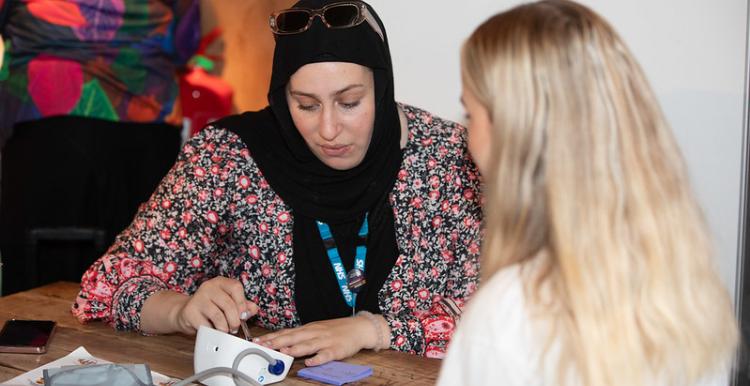
Woman having her blood pressure tested

Our recent exploration of shared values highlighted equity as a core principle of Healthwatch. The trust of our communities, essential for people sharing their experiences of health and care with us, depends on our ability to mirror the diversity of those we serve, thus nurturing a sense of inclusion. 

Our work and decision-making thrive on diverse perspectives. Over the past few years, we have embarked on a journey to embrace equality, diversity, equity and inclusion (EDEI) in our work. Key steps on this journey are set out below.

One of our commitments has been to understand the diversity among our staff, volunteers, and board members across our network and to assess whether our actions are driving positive change.

Thanks to everyone for completing the Healthwatch People Diversity Survey, which gives us a fuller picture of the network's diversity and indicates an emerging commitment to diversity - one element of our shared value of equity as a network.

Downloads

Read our full report on the Healthwatch People Diversity Survey

Steps on our EDEI journey so far include:

2019 Healthwatch England committed to quarterly reporting on our actions to address EDEI across our work.

2020 Joy Beishon, seconded from Healthwatch Greenwich, led work on equity, diversity and inclusion across the network. This included holding conversations with Healthwatch, identifying positive examples of Healthwatch activity across protected characteristics and groups facing inequalities and the introduction of the Equality, Diversity and Inclusion Peer Network, which continues to meet.

2021 We launched a pilot to collect board diversity information, but we received a low response rate.

2022 The first national survey of Healthwatch diversity was conducted, but a low response rate hindered analysis. The board development organisation Getting on Board provided support to Healthwatch boards on recruitment and diversity.

2024 The second national diversity survey was conducted on Healthwatch staff, boards and volunteers. 

Our shared values - how we developed them and next steps

In her latest blog, Louise talks about how we collaborated to develop our new shared values and the next steps we'll take to embed them across the Healthwatch movement.

 I want to thank each of you for your contribution over the last few months in helping us shape our shared values. It was a moment of pride for me to announce them at our inspiring National Awards event – a celebration that vividly showcased these values.

In case you missed it, I am delighted to announce our five shared values:

  1. Equity: Embracing inclusivity and compassion, establishing profound connections with the communities we serve, and empowering them. 
  2. Collaboration: Nurturing both internal and external relationships, fostering transparent communication, and partnering to amplify our impact. 
  3. Independence: Championing the public's agenda, serving as purposeful and critical allies to decision-makers. 
  4. Truth: Operating with unyielding integrity and honesty, fearlessly advocating truth to those in power. 
  5. Impact: Pursuing ambitious endeavours to effect meaningful change for individuals and communities while remaining accountable and holding others accountable.

The journey so far

The journey toward defining these values has been collaborative, with input from 37 Healthwatch and discussions among Healthwatch England staff and our National Committee. Given the emerging consensus, choosing the words for each of our values was relatively straightforward. While there may have been differences in the exact wording, we've encapsulated the diverse range of perspectives through the accompanying descriptors for each value.

Take, for instance, the emphasis on inclusion, which resonated deeply with many of us. This sentiment is reflected in the descriptor for equity, reminding us of the importance of equitable access to health and care services for all and our commitment to empowering individuals to shape the services they receive. It also means our commitment to our staff, volunteers, and board members to support a culture where they can fulfil their potential, thrive and contribute meaningfully, regardless of background or circumstance.

During recent discussions on our future sustainability with over 200 local Healthwatch, local authority commissioners, and Integrated Care Board representatives, a consistent message emerged: our strength lies in our deep connection to local communities with a national footprint, which enables us to effect change locally, regionally and nationally. Underlying this strength, and our role as a critical friend holding health and care bodies to account, are the values of equity, collaboration, truth, independence, and impact. These values drive meaningful change and address health inequalities, forming the foundation of our purpose.

Putting our values into action

When we embarked on this journey in September, we committed to ensuring that our values don't become mere words on paper. It's about embodying these values in our everyday work and interactions.

At Healthwatch England, we will:

  • Add a personal objective for each staff member to reflect on and demonstrate how they apply our values, including as part of staff appraisals. 
  • Factor in our values when reviewing our policies, procedures and intranet. 
  • Focus on exploring the behaviours associated with each of the values at our staff away day in May. 
  • Develop a charter for our National Committee setting out expected behaviours and standards of conduct. 

These are just some of the actions we’ll be taking to foster a culture where our shared values guide our actions and decisions, and we invite you to consider similar actions.

We hope that you will:

  • Share these values with your staff, board members, volunteers, and commissioners. 
  • Discuss internally how you can adopt these values for your Healthwatch or align them to your existing values. We are confident there will be clear alignment from feedback in the workshops. 
  • Take part in discussions about the behaviours that we can all sign up to that will underpin these values. Watch out for opportunities on Workplace and in the newsletter.  
  • Share examples of when your staff and volunteers exemplified these values in the annual Healthwatch survey in September.

Moving forward

Although each Healthwatch is independent, with some being part of larger organisations with your own set of values, it's crucial that we can all align with a common set of values. This cohesion resonates with our funders and stakeholders, emphasising our commitment to the communities we serve. Furthermore, it demonstrates our unity as we advocate for our future sustainability. 

I'm already looking forward to our National Conference 2024, where we'll have the opportunity to reflect on these shared values.

Together, let's harness the power of our shared values to drive meaningful impact and enhance our effectiveness in serving the public.

Securing the future sustainability of Healthwatch

In a new blog, Gavin Macgregor, Head of Network Development, outlines what you told us during a series of webinars focusing on the future sustainability of Healthwatch and talks about the next steps in this vital area of work.
Two people smiling and talking at a Healthwatch event

As you will be aware, ensuring the sustainability of the Healthwatch network is a top priority for Healthwatch England. We know that the current model is at breaking point, with considerable variation across the network and a collective real-terms budget at less than half of what it was in 2013/14. 

We have also seen some instances where local authorities cannot award a contract due to no viable provider being willing to deliver the Healthwatch for the available funds. Of course, many Healthwatch do excellent work despite their limited resources, but they often operate with considerable uncertainty regarding their future and face challenges recruiting and retaining staff.

I want to express my thanks for the invaluable contribution made by Healthwatch in shaping our thinking on the future of Healthwatch. Over the past several months, we have engaged with over 100 Healthwatch and the same number of local authorities. We also received insightful feedback and proposals from an independent agency, Kaleidoscope, following comprehensive interviews with representatives from Healthwatch, local authorities, and integrated care boards.

Kaleidoscope's findings, recommendations and next steps

What stands out from our findings is the collective recognition of both the opportunities and challenges within the network, accompanied by a consensus on effective strategies to address them, while also acknowledging diverse perspectives. It's clear that the primary concern revolves around insufficient funding and significant disparities across the network – brought about due to lack of ring fencing.

The primary recommendation proposes that Healthwatch England should lead the commissioning of Healthwatch services. This proposal aims to achieve a fairer distribution of funding, establish longer-term contracts, and improve consistency across the network, all while safeguarding Healthwatch independence and addressing community needs. While we acknowledge that each approach has its strengths and weaknesses, we're at the very early stages of developing a model and keen to explore deeper into these proposals with your input to maximize strengths and mitigate weaknesses.

It's important to remember that these are findings and proposals. Ultimately, implementation of the main recommendation would require primary legislation, which is beyond the control of Healthwatch England. There are numerous steps to be taken along the way, including those that can be enacted without legislative change to enhance our effectiveness – again which we would like to explore further with you.

We are organising a series of further webinars (see below) to gather your feedback on these proposals, which will be instrumental in refining our strategies. During these sessions, we will also outline the next steps forward, including further engagement with you. Once again, I extend my appreciation for your invaluable input and collaboration.

How you can get involved

Following the recent conversations, we are running a series of futher sessions which will involve a short presentation on the findings and proposals, plus an opportunity for you to contribute to shaping the proposals further.

These events are for anyone in a Healthwatch (please note - those on 16 and 28 May are specifically set aside for chairs and board members) as we want to hear everyone’s views on how we can secure the future sustainability of Healthwatch.

What is an NHS and Care Volunteer Responder, and how can I make a referral?

As a local Healthwatch, you can now refer local people to get help from NHS and Care Volunteer Responders. Find out about Volunteer Responders, what they do, and how you can request help.
Care worker with elderly man

What is a Volunteer Responder?

NHS and Care Volunteer Responders has over 40,000 volunteers who support people in their local community with activities including friendly phone calls, shopping and prescription delivery. The programme is delivered by Royal Volunteering Service and GoodSAM and is supported by NHS England.

What support can volunteers provide?

NHS and Care Volunteer Responders take on a range of activities, including:

  • Check-In and Chat: Provides telephone support to people in need of companionship and encouragement to improve their mental health and wellbeing. This support will be a phone call from a different volunteer for up to 18 weeks.
  • Companionship Calls: Provides regular friendly phone calls and a listening ear up to three times a week up to six weeks. This is with the same volunteer. 
  • Community Response: Provides support with collecting and delivering essential shopping, prescriptions or accompanying someone to a local activity. This is on a one-off basis or for six weeks, days, and times to be agreed between the volunteer and the person supported.
  • Pick Up and Deliver: To transport equipment, supplies and medication between NHS services and sites.

How can I refer someone?

You can make referrals for volunteer support by submitting details online via the Volunteer Responders GoodSAM referrer portal or by calling their Support Team on 0808 196 3382.

How long does it take to make a referral?

NHS and Care Volunteer Responders will approve requests within 72 hours, or you can make referrals through your Local Authority.

Who is eligible for support?

Check-In and Chat

People who may need a friendly chat and some encouragement to improve their mental health and wellbeing.

Companionship Calls

  • People who would prefer or benefit from speaking to the same volunteer.

You can see support for vulnerable people for more information on who is eligible for support for other services.

Growing together: Cultivating shared values

In her latest blog, Louise Ansari describes the importance of shared values and how you can be part of shaping our collective culture.
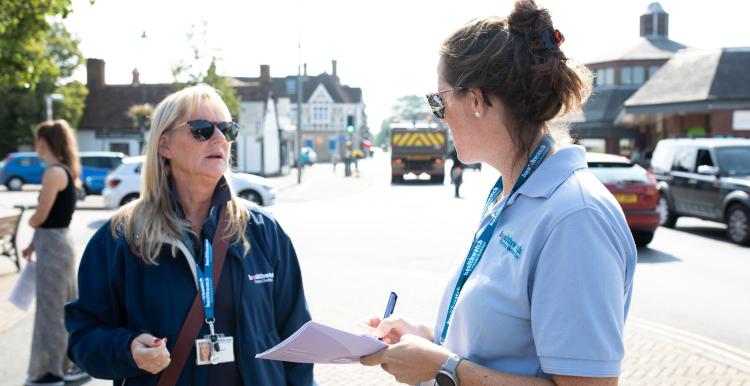
Two women in Healthwatch branded clothing are standing on a high street having a conversation.

Our Future Focus sets out what we want to achieve by 2026, with one objective being to improve our effectiveness as an organisation and strengthen the Healthwatch movement. Our culture, values and behaviours are crucial to achieving this objective, which defines, inspires and drives us. 

We’re about to start the process of developing our shared values. We want you to help us agree our core values, the behaviours the public expects from everyone who is part of Healthwatch, and the actions we need to take to embed them in our everyday practice.

To get you thinking, should they be equity, collaboration and/or integrity? There’s much to consider and you will help us to get this right.

The values and behaviours that underpin Healthwatch culture are the glue that binds us together, as independent organisations working on a shared mission. They provide the basis for us to earn the trust of the public, including people who have experienced discrimination and inequality, and the respect of health and care decision-makers who we are encouraging to act on our insight and recommendations.

All too easily, values can be glib and inauthentic words on paper. What’s important is how we put them into practice whether we are a lead officer, staff member, volunteer or Board member. As organisations delivering public functions, it is right that we support each other and hold ourselves to account for how we act and behave.

The process of how we arrive at our shared values is important and worth taking time over. Just like the work we started on equality, diversity and inclusion, it’s an ongoing conversation that’s needed, rather than an item that needs ticking off from the to-do list. We’ve put on both face-to -ace events and online webinars, as the former can elicit rich conversations while the latter ensures there are opportunities for everyone to participate. If the online events are oversubscribed, we’ll add more sessions to the calendar.

How you can get involved

There is one in-person workshop being held in London and two online webinars scheduled where you’ll:

  • Help define our shared values and behaviours.
  • Identify how we might best use the values and behaviours, including to help motivate our Healthwatch teams.
  • Identify how we’ll measure their effectiveness.
  • Identify opportunities to continue the conversation, such as through peer networks.

In organising the events, we’ll be considering how to balance making sure people can talk openly in a safe space that’s also enjoyable, worthwhile and inclusive. Our National Committee and staff will also participate in the workshops, so this is a collaborative process.

We firmly believe that developing shared values is not only right for a stronger Healthwatch movement, but also important in our ambition to deliver improvements for the public and secure a sustainable future.

Sign up to one of our events:

Update on Network Support from Healthwatch England

Gavin Macgregor explains how Healthwatch England plans to streamline and improve the support it provides to the Healthwatch network.
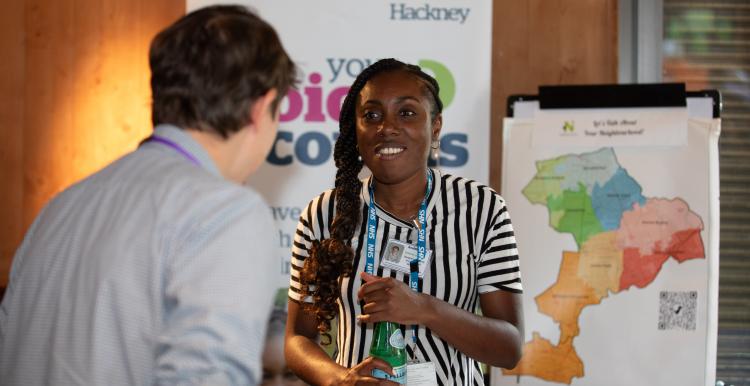
A male and female in conversation at an indoor community event. His back is to the camera, she is smiling at the camera. A Healthwatch banner and map of the local area are in the background.

Over the past few months, I have spoken at regional forums and other events about some of the changes we propose to make in how we work with local Healthwatch. These changes follow on from what we shared with you in Our Future Focus and in my last blog with Louise Ansari.

In proposing these changes, we're keeping in mind the priorities you shared with us:

  • Reducing the asks we make of you.
  • Having a better understanding and making the most of local Healthwatch achievements.
  • Improving two-way communication.

Here’s what I’m covering and what they mean for your Healthwatch:

  1. Demonstrating your value – advance notice of the questions in the annual survey, which we will ask you to complete in September 2023.
  2. Understanding the diversity of Healthwatch – advance notice that we will be asking you to complete a survey on the demographic profile of your Healthwatch in November 2023. In the meantime, we are providing a template to help you collect this information.
  3. Sharing your accomplishments – we’re busy analysing your annual reports, and we want you to continue to share the difference you make.
  4. Working with the Care Quality Commission – we’re supporting Healthwatch with the new approach to assessing local authorities and Integrated Care Systems.
  5. Quality Framework – we’re continuing to support Healthwatch who want to undertake the Quality Framework and have introduced a badge for those Healthwatch who have completed it.
  6. Check-in with your Regional Manager – we’re encouraging all Healthwatch to have, at least, an annual check-in to understand your support needs.
  7. Integrated Care Systems – a new ICS Healthwatch Representatives network is holding its first meeting on 12 October.
  8. Data sharing – just a big thanks to for everyone sharing your data, including demographic data.

Demonstrating your value

In response to your feedback, this year we have reduced the number of questions in the annual survey.

Click here to see what data we intend to collect in the annual survey in September.

Our annual report, which is presented to Parliament, makes the case for investment in Healthwatch and supports the National Committee with their statutory role in ensuring Healthwatch activities are carried out properly.

Understanding the diversity of Healthwatch

In our last blog, we asked for your help to significantly improve the response rate to our Healthwatch People Diversity Survey, as the response rate was less than 40% in 2022.

We said we would send you the questions in advance, which you can view here.

This year we are asking for data on the combined total of your staff, volunteers and Board. The data you provide will be anonymous and not linked to your individual Healthwatch – but we will ask whether your Healthwatch has completed the survey using a linked but separate survey.

If you currently do not have the required data on the demographic composition of your staff, volunteers and Board/Advisory Board members, you can use the Healthwatch Diversity Survey template which is available on this page and in SMART Survey if you have an account. Go to ‘My Surveys’ in SMART Survey, make a copy and then you can send this to your staff, volunteers and Board members.

Given that Healthwatch advocate for health equity, it is important that we strive to reflect the communities we serve. Our training programme includes support for Healthwatch on improving volunteer and Board diversity. We want to track whether these and other measures that individual Healthwatch are taking are making a difference. We'll report the results back to the network.

Sharing your accomplishments

You told us we should make better use of your stories of change – to support raising our profile, demonstrating what Healthwatch have achieved and sharing what's working with Healthwatch and our external stakeholders.

We're currently analysing all of your annual reports to get a picture of the individual and collective impact of Healthwatch. We'll draw on your examples to support our national work and share them in forthcoming newsletters.

Please also start using our new Impact Tracker or the simplified sheet to tell us about the difference you’re making on an ongoing basis. The more of your recent success stories available to promote and talk to national stakeholders about, the better.

Working with the Care Quality Commission

You may be aware that the Care Quality Commission (CQC) are piloting how they will assess local authorities and Integrated Care Systems. Healthwatch England is working with CQC to support local Healthwatch in the pilot areas which will be evaluated. We will share learnings from the pilots with Healthwatch so you know what to expect and how CQC will engage with you.

You will have a dedicated point of contact within CQC, but be aware that  some posts are yet to be filled. If you are unsure who to contact at CQC, please get in touch with your Regional Manager.

Quality Framework

Demonstrating your effectiveness is never more important than in difficult financial times. Over three quarters of Healthwatch have now completed the Quality Framework - with 50 in the last year.

We’re continuing to support Healthwatch who want to undertake the self-assessment process. Some have used the process to help prepare for a tender process, while others have used it in preparation for a new strategy. We’ve seen several Healthwatch use it to consider how they apply equality, diversity and inclusion across their work. We’re recommending Healthwatch complete it every three years.

Analysis of completed Quality Frameworks demonstrates many strengths, including reaching and engaging with people facing the greatest health inequalities and managing people. Healthwatch reported challenges with the role of Boards/Advisory Boards who support the governance and decision-making of Healthwatch and meeting the statutory requirement for transparency in our work. In response, we developed an extensive programme to support your boards with recruitment and self-appraisals, from which we developed guidance for both hosted and standalone Healthwatch.  

We’ve made it easier to complete using the improved Smart Survey format, which we expect all Healthwatch to use after December 2023.

We’re introducing a badge so your Healthwatch can demonstrate your commitment to improvement. This could be displayed on your website footer, email signature or other appropriate materials. If you are eligible, you will receive an offer directly.

Check-in with your Regional Manager

We encourage all Healthwatch to have at least an annual check-in with their Regional Manager. We use these meetings to check if you have any support needs and talk through the Quality Framework if you have recently completed it. It’s a really important opportunity for us to make sure we understand your needs so we can inform our national work and how we can best support you.

Integrated Care Systems

In response to requests from Healthwatch, we are establishing a network for Healthwatch ICS Representatives, with the first meeting taking place on 12 October. For ICS areas with more than one Healthwatch, you will need to decide among yourselves who will represent your area. You can sign up here.

Data sharing

Local Healthwatch tell us that our new Data Sharing Platform is easy to use. Between April and June, 21,839 pieces of feedback were shared with us by 54 Healthwatch from 28 ICS areas. We’re in the process of onboarding the remaining Healthwatch and supporting you to regularly share your data.

We are also seeing a welcome increase in demographic data, which helps our analysis and enables us to highlight where the health and care system needs to listen better and take further action, including on tackling inequalities.

A big thank you to everyone for helping us; keep sharing your data and reach out if you need any help: DataSharing@Healthwatch.co.uk.

Growing together

What could the new relationship between us look like, and what does it mean for you?
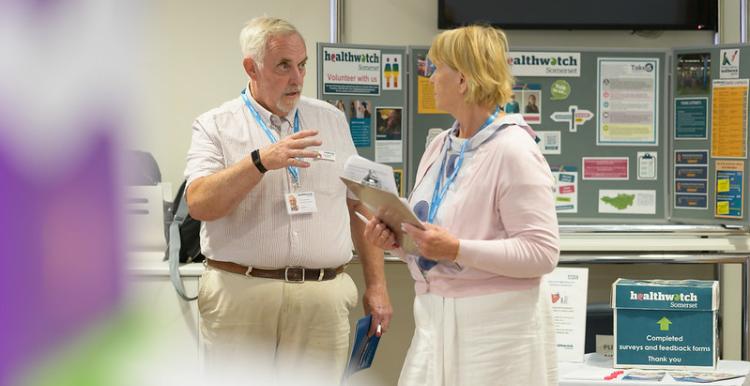
A man is standing on the left talking to a woman, standing on the right. The are standing in front of a Healthwatch information board.

In Our Future Focus: the Healthwatch England Strategy for 2023-26, there is much mention of the challenges and opportunities we face, and how the context of health and care has changed, in a way that feels like it will be here to stay for the foreseeable future at the very least.

With the NHS and social care under unprecedented demand, and with its resources under enormous pressure, what does this mean for our role in ensuring people’s experience of care helps shape improvement? 

How can we be stronger organisations in our own limited resource context? How can you build impact in an environment where commissioning is often a challenge to stability? How can we perform our statutory duty of supporting you better?

As we celebrate our 10th anniversary, we’ve much to be proud of - here’s why and what you have told us.

You show time after time how:

  • You are connected to your communities –whether it is getting cervical screening sorted for Bangladeshi women, gathering feedback on cancer services from those facing health inequalities or bringing attention to the impact of vaping on young people
  • You can bring the right people around the table to find solutions and act as a critical friend
  • You stay true to your independence and hold bodies to account

We could list others, but here are some harder things that we hear:

  • “I’ve never heard of Healthwatch”
  • “You come over as amateurish”
  • “You don’t meet your potential”
  • “I listen to you grudgingly because of your statutory role”
  • “Healthwatch need to reach beyond those we already hear from”

The response to these challenges could simply be: we do our best on the (shrinking) resources at our disposal. After all, our funding has reduced by 20% and 38% respectively, with significant variation across the network. Staff retention and the ability to plan ahead are also affected by short term contracts; and changing health and care structures make influencing harder.

But the truth is when the economic environment is harsh, it’s even more critical to demonstrate our value and ensure our house is in order – especially if we are making the case for our sustainability.

Our future relationship

In our strategy consultation, this is what you’ve asked us to do. This builds on what you’ve said to us and the team over the last few years.

Resource and commissioning 

If there is a legislative opportunity, we want to be ready with a sustainable and effective model – tried and tested if there is time. We’ll need your help to build on what’s already working well and look at the different options.

In the meantime, we will continue to work with local authorities to support effective commissioning, including looking at a more consistent approach to contract monitoring.

Our culture 

Culture defines our internal and external identity, motivates and keeps our people and makes us feel part of a team and movement. Many of you have already set out the values and behaviours that underpin your culture. We'll be looking at our own culture, and we thought it would be beneficial to do this alongside the network so we can all adopt or align to a shared set of values and behaviours. This work will commence in Autumn 2023.

Communications 

You told us that two-way communication between us should improve, the number of asks can feel burdensome, and it can be challenging to find the information and resources you need. We’ll review how we communicate, including revamping the network site – with your help. This will be ready by March 2024.

Impact, facilitating peer support and collaboration 

Mindful of your feedback about not making too many asks, we’re keen to better understand the impact you are achieving, spot any trends across the network to inform our policy work and make sure we promote it to all our audiences – including other Healthwatch. We will also offer to facilitate collaboration between Healthwatch and peer support networks – all the time making this optional so as not to impact your local priorities. We’ve started having these conversations at regional forums and will set out our approach in more detail before September 2023.

Professionalism and skills 

Our value relies on the professionalism and skills of our people – staff, boards and volunteers. With your help, we’ve set out the core skills and corresponding training and support options – many of which are developed and delivered by network members. You can find out more here.

Equality, diversity and inclusion 

We are continuing our commitment to support equality, diversity and inclusion, set out in the Roadmap. You will see we are offering a programme of training; we will be looking to profile Healthwatch activity that addresses inequalities; we will continue to support the Equality Diversity and Inclusion Peer Network and support sharing of best practice.

We also want to ensure we understand the Healthwatch network’s profile amongst communities and people with protected characteristics. We’ll need your help to significantly improve the response rate to our anonymous Healthwatch People Diversity Survey, as we previously had a low rate of return. We will shortly send you the survey questions in advance, so you have plenty of time before we collect the survey results in November 2023.

The value of Healthwatch

So yes - we must take on board the harsher things that are said about us, but equally I hear that we punch above our weight; that Healthwatch are being commissioned on the strength of your connection to communities, the value you bring to your systems; and how you support each other to overcome challenges and capacity issues.

I wholeheartedly believe that by supporting each other and collaborating on the priorities outlined above, we can secure our sustainability and unleash the full potential of the Healthwatch movement, which will ultimately improve care and the lives of the people we serve.

Using smart survey to work together

Using Smart Survey, a free tool we provide, can help you work collaboratively with other local Healthwatch in your area.
three women in a hospital completing questionnaires

We recently announced we have made the Smart Survey tool available to you for a second year to help support your data collection.  

What's on offer?

This year you will still get access to the enterprise edition – something that may be beyond the budgets of many of you – because it allows you to share surveys. You told us the ability to share surveys was important, given the increasing need to collaborate, such as conducting work across an Integrated Care System footprint. 

The eight Healthwatch within the North East London footprint used Smart Survey for some commissioned work for London Ambulance Service. Healthwatch Wokingham Borough, Healthwatch Reading and Healthwatch West Berkshire also used Smart Survey for collaborative work. 

How can Smart Survey be useful for working together?

We use Smart Survey to create a template survey which you can copy to collect results in your area, allowing for consistent data analysis. A recent example is the cost-of-living survey. 

Setting up a shared survey is simple, which other selected Healthwatch can use to collect results. You can use the tools within Smart Survey to carry out analysis or export the results to analyse in Excel or Power Bi. 

You'll be able to present your results to your Integrated Care Board – demonstrating the value of Healthwatch in every area and connected to your local communities. 

Three things to consider: 

  1. Smart Survey is free – if you haven't signed up already, it's quick and easy. You'll need to sign a data-sharing agreement with us if you have not already done so. Click here to sign up
  2. Ensure your privacy notice/communications informs people you are surveying that you will share their data with other Healthwatch. We have a template privacy notice  - page four asks you to consider data sharing with other Healthwatch and how such data will be stored and shared securely. 
  3. We encourage you to have a data-sharing agreement in place. You can use this data-sharing template. It’s important to remember to download the data from Smart Survey – for security reasons, don't keep it stored in it after you have finished your work. 

Have you got your head around data protection?

You can read our guidance and take our latest e-learning training on effective implementation of data protection and collecting, using and storing data lawfully.