Help us help you

Help us better support you by taking part in our survey.
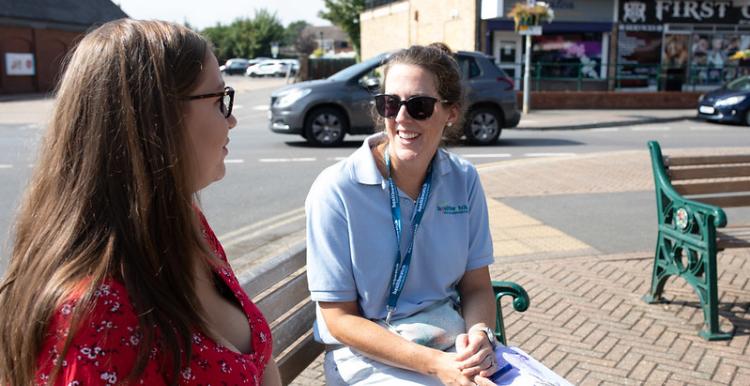
Two women laughing

Each year we ask you for:

  • information about your activities (the Annual Survey)
  • feedback on the support we provide you (Satisfaction Survey).

We also ask about your learning needs every two years.  

We use this information to shape the support we provide to you.

Tell us what you think

We’d like all Healthwatch staff and Board members  to complete the combined Satisfaction and Learning Needs survey for 2023.

This is anonymous, only takes five minutes to complete and will help us learn and improve how we can best support you.

Take the survey

How we’ve used what you told us previously

Communications and asks

We heard mixed views about how we communicate with you. Some of you have seen a better flow of communications. However, we’ve had a strong message that we should reduce the number of asks and improve how we communicate our priorities. 

You should have noticed that we’ve introduced the Month Ahead – which sets out forthcoming campaigns, publication of new resources and guidance and the priority areas we would like you to tell us about, such as winter pressures. We share this on Workplace and in the newsletter on a monthly basis.

Support on Integrated Care Systems

At the time of the last Satisfaction Survey, Integrated Care Systems were not yet legal entities. You told us that support and resources on working with ICSs had been welcome. In the annual survey, 80% of you reported that relationships were effective when working with other Healthwatch within ICSs and 70% reported effective relationships with your ICS/ICB.

Understanding the demographic profile of staff volunteers and Board members

Along with last year’s annual survey, we included an anonymous survey on the demographic profile of Healthwatch boards, staff and volunteers to understand the extent it reflects the national profile with respect to protected characteristics. We want to track the diversity in the network – the importance of which Berkeley Wilde, CEO of the Diversity Trust recently spoke about at the meeting of Lead Officers to assist in understanding whether the actions Healthwatch are taking individually and collectively are having an impact.

Disappointingly, due to a low response rate we are unable to carry out meaningful analysis and establish an accurate benchmark. Only 40% of Healthwatch completed the survey. We will be repeating the survey in 2023 and will review how best to improve the response rate from Healthwatch and would welcome your cooperation.

Learning, training and webinars

We get a lot of positive feedback about the range and quality of learning opportunities and resources available, including the introduction of e learning and sessions led by other local Healthwatch where you can learn from them.

Last time, you told us that we should consider co-ordination of resources to prevent duplication and overburdening Healthwatch. We have a new process in place for new resources which we tell you about through the ‘Month Ahead’.

You asked us to consider core skills and to make it clearer which guidance and training is suitable for different roles and skill levels – something we will be addressing in 2023. Don’t forget to ask staff and Board members at your Healthwatch to share their views about the support we provide via our survey.  

You asked for resources on research skills. Over the past year we’ve produced a range of resources including:

We have also created a dedicated online area with links to resources on data and digital, including data protection.

I hope you can see that we value every bit of feedback we receive through these surveys, as well as through other means, including informal chats. So whether positive or telling us how we can improve, we are keen to listen, so please encourage your staff and Board members to complete this year’s survey.

Gavin Macgregor

Head of Network Development


Four steps to take now to prepare for writing your annual report

Find out what quick and simple steps you can take now to make writing your annual report easier and quicker come June and read our tips from the review of your 2022/23 reports.
Healthwatch staff member standing in front of a stall

It’s a familiar scene.  It’s mid-June, and the Healthwatch lead officer is pulling together content for the annual report. The hoped-for lull in other work demands has again proved to be something of a mirage, so it’s another evening at the keyboard, writing up accounts of outcomes achieved over the year and ensuring all statutory content is included. “If only I’d spent a bit of time earlier in the year …” she thinks to herself. 

If this scenario resonates with you, then maybe there are a few things you could do right now that you’ll thank yourself for in five months’ time. 

Of course, I'm not suggesting you spend ages writing annual report content in January! 

But a bit of time spent now on some of the following things could really pay dividends when the time comes to produce an engaging report about your work up to the end of March. This helps to demonstrate the value of Healthwatch to local people, your funders, Integrated Care System (ICS) and other stakeholders. 

We're really seeing yearly improvements in how you're evidencing outcomes and impact. Last year over 70% of Healthwatch annual reports included references to outcomes that had been achieved. That's up from 50% the year before! This is fantastic to see, as local authority commissioners also tell us how important it is for their Healthwatch to be aware of communicating this. But there's still variation in whether the write-up conveys something about how improvements are likely to be felt by people using the services. Taking that extra step of mentioning a service change's wider impact really helps convey the value of your Healthwatch's contribution. 

To think more about the wider impact of your work, don't forget to take a quick look at this e-learning module on outcomes and impact

1. Consider which areas of work and outcomes you’re likely to headline? 

This year, the design of our template will again suggest the report is kept short so that people are likely to read it.

This means choosing two or three areas of work to succinctly showcase, with as much focus as possible on how you’ve contributed to positive change for the public. The two information and signposting case studies and paragraphs on "Three ways we have made a difference" should also focus on impact. 

If outcomes from work started in previous years have now been achieved this financial year, then there's no reason you can't feature those. It's all part of the story of what service you deliver for the public. 

Key things to consider: 

  • Do you have an idea now about which areas of work you’re likely to feature?  
  • Is there anything additional you could do now in your planning or delivery which can help evidence the outcomes of that work?  
  • Is there anyone you could ask now for a quote about the difference you made? 
  • Could you hold a workshop with your team and others to reflect on your strongest achievements? 

2. Decide if you'll be able to reuse much of your ‘Statutory Statements’ section. 

Most Healthwatch will be able to reuse or just slightly update the text in the sections of your last report:

  • The way we work
  • Methods and systems used across the year’s work to obtain people’s views and experience
  • Health and Wellbeing Board

Since April 2021, you may have done more face-to-face activities, so most updating will be about this. Other content might stay exactly the same. Make a note of that now, and be pleased you are already a step ahead!

Other figures on the number of people who've shared experiences, signposting and information enquiries, website and social media reach and funding levels will be needed for both your annual report and the annual national survey. Healthwatch England will be sending this out around the same time as you submit your annual reports, as they need to report the figures to parliament. Having these numbers to hand will save time on both fronts. 

3. Decide which volunteers you’d like to feature and ask them for content now. 

There’s no reason you can’t ask volunteers to write a personal profile and send you a preferred photo at any point in the year.

This can help make sure you can feature those who’ve contributed lots but might move on before the year ends. Plus, ensuring you aren't rushing last minute to find a photo that’s the right size and not pixilated – we’ve all been there! 

Three profiles of up to 80 words with photos usually fit well on the one page. 

Aim to feature different stories about why they volunteered or the work they’ve done to make a difference to your community. 

This is also an opportunity to show people from diverse backgrounds who read your report and who might want to volunteer that they’d be welcome. 

4. Take a look at what other Healthwatch did last year. 

By looking at the approach taken by some other Healthwatch, you can start to talk to your team about how you write for your next report. 

Each week until the end of February, I'll post on the Annual Reports Workplace group an example of one of last year's reports with a strong impact focus. 

You'll then need to decide if anyone in your team should join our workshops about writing for impact that we have coming up from March 2023. Keep a lookout for these and other related learning opportunities on our events listings page

Here’s to hoping that this year producing the annual report feels more than ever like a fantastic opportunity to showcase the outcomes that Healthwatch has achieved. 

Do you currently store data in CiviCRM?

If you are one of the local Healthwatch who uses our CiviCRM system, then please don’t forget your access expire on 31 March unless you have chosen to stay with Civi through Circle Interactive directly.

If you are losing Civi, you need to make arrangements to export your data. If you’re not sure where to start – we can help you! Please email Michael Samuel without delay so he can prepare your export and check it meets your requirements. The deadline for us being able to transfer data is 30 April 2023, after which we are legally required to destroy the data.  

Make sure you are prepared and download the bulk of your data now so you can start looking for good stories to feature in your annual report.

For more information, please see the formal notice of withdrawal of Civi.

Read the notice

Healthwatch Week 2022: What did you miss?

Couldn't join us at Healthwatch 2022? Here are some of this year's highlights.

About

Over 420 staff and volunteers from across the country joined us online to discuss some of the most significant issues affecting our communities. Take a look at the key takeaways from each day, and links to any additional resources. 


Day one

A message from NHS England

Amanda Pritchard, Chief Executive of NHS England, kicked off our conference by discussing the difference we can make when we work together.

Levelling up listening 

In our first keynote session of the week, our panellists discussed how the NHS, local authorities and other public bodies could ensure those most disadvantaged have their voices heard. 

Our session Chair, Rev. Charles Kwaku-Odoi, Chief Officer at the Caribbean and African Health Network, kicked off the discussion by posing a simple question to the panel: 

"How do we level up listening?" 

In response, our National Director, Louise Ansari, highlighted the disparities in funding for local Healthwatch services. As a result, those who face the greatest inequality often have their voices heard the least. 

Next, we heard from New Local Chief Executive, Adam Lent. He stressed that to break the cycle of poverty and inequality, we must address the distribution of power as well as resources. He also called for three changes the public sector must make: 

  1. Open up decision making
  2. Deliver services in a different way
  3. Break the top-down mindset and put communities first

Finally, Clare Enston, Head of Insight and Feedback at NHS England, took us through the NHS approach to listening and how Integrated Care Systems can work with local Healthwatch to involve communities in health and care. 

 Healthwatch – our strategy and shared direction of travel

With work on our new strategy underway, we ran a session to hear the views of local Healthwatch about what we should focus on and how the network could support this work.

There was a lot of support from the network to do more work on social care, integration of services and health inequalities. We also need to focus more on working with professionals to understand our remit and what we do so that they are more willing to work with us.

To achieve this, we will continue offering training and support to the network, raising our profile in the media and offering support to people in the current worrying economic climate.

With the departure of our chair Sir Robert Francis KC, we will continue to work on the new strategy when the new chair arrives and are hoping to publish it next spring.


Why engaging people is crucial to tackling health inequalities

On the second day we focused on how Healthwatch can help dismantle systemic inequality and improve universal access to health and care services. 

We talked about inequalities because they have a real impact on health. But this session went one step further to see how we can identify system-wide inequalities. 

Our five expert panellists were: 

  • Dr Owen Williams OBE, Chief Executive, The Northern Care Alliance NHS Group
  • Dr Habib Naqvi MBE, Director, NHS Race and Health Observatory. 
  • Andrew Fenton, Transformation Director at NHS South, Central and West Greater Oxford Area
  • Rachel Brennan, National Partnerships Lead, Groundswell 
  • Malavika Vartak, Researcher and Policy Advisor at Amnesty International

Dr Owen Williams started us off by highlighting the importance of the NHS Constitution in holding services to account. 

Trust was also a significant theme in our discussion, as Dr Habib Naqvi described :

"Trust is fast becoming a new determinant of health. It determines their decisions of taking up healthcare or not, so listening to people and acting upon what we hear is critical." 

We heard from Andrew Fenton and Rachel Brennan about how to tackle inequalities by working with people who know what it is like to not get the care they need because of who they are or where they live. 

Finally, Malavika Vartak spoke about people's right to health and how vital high-quality information and clear communication are for ensuring equal access to care. 

Tackling health inequalities together

Together with the network, we discussed steps that we can take to connect with and involve our communities to help tackle health inequalities. 

We heard that:

  • Limited resources and large geographical spread makes it hard for some local Healthwatch to gather quantitative research with under represented communities.
  • People tend to get asked the same or similar questions or on similar topics repeatedly, it's important to be able to track impact and report back to these communities to help them understand the value in sharing their experience with you. 
  • People's real stories helps stakeholders to really understand the context behind the numbers. Bring people to share their experiences so leaders can hear them first hand if you can. 
  • Using trusted organisations that already have either data or connections that you can use is vital to helping you understand where you can add value and build on existing work. 
  • Reach out to partnership organisations and grassroot groups through various avenues (online, community events) and see how you can get involved. Start building relationships with communities by providing support instead of requesting information straight away. 


Putting a face to unmet need - the role of Healthwatch

Sir David Pearson CBE introduced today's session by discussing the reasons why people have unmet needs:

  1. Not getting an adequate assessment 
  2. Funding difficulties 
  3. Increased need and demand for services year on year
  4. Pressure on the health service has a knock-on effect 
  5. Workforce - currently has 165,000 vacancies in the social care sector 

Professor Vic Rayner OBE kicked off the discussions around the importance of thinking about the type of care people want rather than simply what they can buy. She followed up by highlighting the problem of the ageing population and that finding staff for social care services will only get more challenging as the ratio of working people to the over 65's decreases – and whether digital options might be the future of social care. 

Cathie Williams discussed our mutual concerns of unmet, under met and wrongly met needs. The need for services is rising faster than capacity can grow to meet it, and there is not enough social care services or workers to provide it. 

The session wrapped up with an emotional first-hand story from Dorothy Cook. She shared the difficulties of finding help and support when she first became a carer, the pressures the system has put on her, and the daily challenges she faces as a full-time carer. 

Unmet need: How we can improve advice and information services

We know that information about social care services needs to improve. People want a a reliable and trustworthy source of advice that helps people understand what support is available to them.

We heard from Hannah Davies from Healthwatch Leeds who said that 41% of people in Leeds didn't know what adult social care services could offer.

However, it's not just about making the information available.

Some of the key changes that we identified are: 

  • Adult social care services need to be more proactive in telling people what they do and how they can support them by going into the community rather than expecting people to come to them
  •  People with additional communication needs should have better access eg. plain English and Easy read is essential; information should be available offline in addition to online
  • Services should link people to relevant community groups and proactively work with others in the sector to improve access and engagement with people
  • Services should empower people to advocate for change and ask the right questions.

Healthwatch Network Awards and showcase 

This year our impact award celebrates projects that have used people's experiences to improve care and lead to outstanding outcomes. 

The projects entered this year were of an incredibly high standard, showing where teams have gone above and beyond to ensure health and social care services meet everyone’s needs.

As part of the Healthwatch Impact Awards, we heard from the shortlisted Healthwatch about the work they've done:

  • Healthwatch Bolton talked about the engagement work they did to increase cervical cancer screenings for people from minority communities. They focused on increasing information and raising awareness to help remove barriers these communities face.
  • Healthwatch South Gloucestershire found new mothers without pre-existing mental health conditions were not being offered mental health support by local health services. Their work improved the care offered to new mothers by the health visiting service.
  • Healthwatch Norfolk talked about implementing a hearing loss and deaf-friendly charter that highlights good communication practices and ensures people with hearing loss can access primary care online.
  • Healthwatch Kent explained how good engagement built relationships with the Nepalese community. Nepalese elders brushed up their digital skills, which ensured they could access care - reducing inequalities.
  • Healthwatch Sunderland shared their journey with a local resident to get mammogram recall letters made available in an easy-read format for all women in England who need it.
  • Healthwatch Hackney talked about getting over 80% of their local practices to change their patient registration policy, so it's easier for those experiencing homelessness to see a GP.
  • Healthwatch Brighton and Hove explained how they got a local GP surgery to reverse a plan to reduce their opening hours. A step which would have left residents struggling to access appointments.
  • Healthwatch Bristol shared how they helped bring changes to the discharge process at their local hospital to make it safer for patients and ensure people better understood what was involved.

Awards presentations

Download the presentations from the showcase

The winner:

Healthwatch Hackney, for their work to help make it easier for refugees to see a GP. 

Highly Commended:

Healthwatch Bolton, Healthwatch Brighton and Hove, Healthwatch South Gloucestershire and Healthwatch Sunderland were also highly commended for their projects that used people's experiences to improve care and lead to outstanding outcomes.

Find out more

Have your say on Healthwatch Week 

We want to hear your thoughts. What went well, and what can we make better next year? Please take five minutes to complete our short, confidential survey. 

Share your views

The Research Helpdesk – all the ways we support you

Find out how the Healthwatch England Research and Insight team can help you with your research questions and professional development.
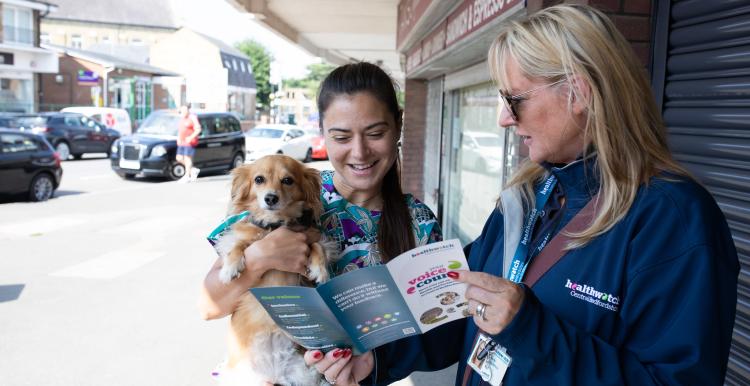
Two women sitting on a bench. They are in a town centre on a sunny day. The woman on the left is wearing a red top. The woman on the right is smiling, wearing sunglasses and wearing a light blue top with Healthwatch logo.

The Healthwatch England Research and Insight team analyses people's experience of care to inform our national policy report. We also offer advice, networking and learning opportunities to build your research skills and support you on projects. We have over 80 years of research experience between us, from market research to clinical trials, and are always happy to help.  

How can we help you?

  • Online clinics – we offer informal research clinics every month. These clinics are a chance to sit down with a member of the team and discuss any research problems you may have. People have spoken to us to refine their surveys, talk through the design of their study, and discuss data analysis. If you’d like to talk to us for an hour, fill in this short sign-up form, and one of us will be in touch to help you.
  • Information requests – we can help you find information about different topics, whether you’re working on a specific project or just looking for general insights. We can help you find other local Healthwatch projects, relevant work by other organisations, or publicly available datasets.
  • Research guidance – we can answer specific questions about the research process for you, including questions about planning projects, designing methodology, analysing data, consent, and GDPR. We have also created a range of written guidance and e-learning courses to support you through the research process, including our bank of sample survey questions.
  • Demographics support – collecting demographics is a great way to identify health inequalities in your area. We offer support on how to collect and analyse demographic data, including taxonomies and sample questions. You can also book a research clinic if you want one-to-one support collecting or analysing demographic data.
  • Training and events – we run a range of events throughout the year, including training sessions, reports showcase webinars, networking meetings, and sessions during Healthwatch Week. Keep an eye out for them on the training and events page.
  • National Healthwatch England project queries – we can provide information, advice and guidance about national projects that Healthwatch England are working on, and what we’re monitoring in the month ahead.

Networking

The Research Helpdesk Workvivo page is a friendly group of research and engagement staff across the Healthwatch community. The Healthwatch England Research Team regularly share updates on what we’re working on, new guidance, and information about upcoming events. This is a great place to share what you’re currently working on or ask staff from other local Healthwatch for help and support.

Our Research and Insight Network Group is made up of local Healthwatch staff who are interested in research and sharing examples of good practice. Email research@healthwatch.co.uk if you’d like to join our mailing list, to get up-to-date information about what we’re working on and what meetings are coming up.

Sharing data with Healthwatch England

  • Support with data sharing – we know there are many different ways you can share your data with us, and your data is used for different purposes. We can  support you in sharing data with us, to meet your legal obligations . We can also share what your data has been used for and how local Healthwatch data informs the work we do at Healthwatch England.
  • National Reports Library support – we maintain the National Reports Library and support the network to share and upload their reports. Together, we can create a rich data source for the public and the Healthwatch network to use.
  • Digital transformation – we know that how you share your data with us is changing with the retirement of CiviCRM, the introduction of a new data sharing system, and the ability to upload your own reports coming soon. We can signpost you to the people and resources you need to answer your questions about the transformation.

Your reflections from the accessible information research project

From September 2021, the first phase of work on the Your Care, Your Way campaign began. Read on your reflections and key learnings.

The first phase involved undertaking an initial research project with six local Healthwatch who interviewed people from ethnic minority communities with either limited or no English about their experience accessing health and care services. 

Local Healthwatch shared their reflections from the project, including their experience working closely with us on a national campaign and engaging with diverse, hard-to-reach communities. 

Background to the project

We funded six local Healthwatch to interview people from ethnic minority communities with limited or no English. 

The six local Healthwatch were:

  • Healthwatch Camden
  • Healthwatch Croydon
  • Healthwatch Hackney
  • Healthwatch Liverpool
  • Healthwatch Norfolk
  • Healthwatch Reading

Local Healthwatch engaged 109 people from diverse ethnic minority communities, including people who identify as Arab, Bangladeshi, Chinese, Polish, Ukrainian, Somalian and Honduran.  

Additionally, 38 staff members working in different healthcare settings took part in the research to share their experiences. 

What worked well?

Local Healthwatch reflected that a key strategy was to work with local organisations with existing contacts in hard-to-reach communities.

The project created a need to build strong relationships with new organisations. These relationships were cemented as local Healthwatch worked closely with local organisations.

Local Healthwatch reflected that a powerful aspect of the project was that local organisations felt they were part of a national campaign. As a result, organisations were motivated to maintain good communication with local Healthwatch. In turn, this expanded the reach of Healthwatch to new and broader audiences. 

Monetary incentives were helpful and, at times, were used to pay for administration for other organisations. Local Healthwatch felt it worked well to be given the authority to use funding as they thought necessary to establish community contacts. 

Local Healthwatch also felt that this project helped them become more aware of existing communities in their local area and their challenges. We heard how Healthwatch was the 'talk of the town' amongst some local communities who recognised that Healthwatch allowed them to amplify their voices at a national level. This project helped to establish a trusting connection with this community.

Outcomes from taking part in the AIS primary research project

  • Healthwatch Hackney is working with their local council, which currently has no policy around interpretation, and there is no consistency with using interpretation services. Healthwatch Hackney feels its findings will be helpful in this context.
  • Healthwatch Liverpool reported that Liverpool Trusts had been spurred to review Accessible Information Standard (AIS) policies. They also felt the issue is much more on the radar now locally.

What didn't work so well?

It was challenging to find professional interpreters. Local Healthwatch had to work with multiple agencies, experienced cancellations and lost money when interpreters did not show up. The cost of professional agencies is high and would not be feasible within the budget if Healthwatch had required professional agencies for all participants. 

Finding interpreters for specific languages, such as Ukrainian and Tamil, was also challenging which could be more costly. Community contacts were vital here, as they were willing to provide interpretation at a low cost or even for free.

Local Healthwatch would have liked to have recruited a more representative sample and found it easier to speak to people women from specific communities.

Key learnings for Healthwatch England

Local Healthwatch provided feedback to us, praising the materials, guidance and support they received. Key learning 

·      Enjoyable experience. Working with other local Healthwatch was an enjoyable part of the project experience, and regular meetings to share experiences during the research process were helpful. 

·      Support could have been better. There were some limitations to the methodology, such as that interview questions were lengthy and complex. This was further complicated by low literacy or health literacy levels amongst interpreters.

·      Holding focus groups was challenging. Focus groups were a challenging aspect of the research, mainly due to the role of interpreters. Local Healthwatch felt that participants did not necessarily understand the purpose of a focus group. These challenges were further complicated as focus groups had to take place online.  

·      Better planning. Local Healthwatch thought that there could have been better consideration of timelines. Taking on the accessible information campaign had a knock-on effect on other projects and priorities. The relationship between Healthwatch England and local Healthwatch should be followed up right to publication.  

·      Outputs at a local level. It would have been helpful for local Healthwatch to have a toolkit helping them to think through how to utilise findings at a local level. Discussions between local Healthwatch could have carried on beyond the research to consider how to produce something useful at a local level. 

Reflections from Healthwatch England

We were impressed by the strength of the community contacts and the ability of local Healthwatch to recruit such a diverse sample in a short timeframe.  

In future projects, we will aim to improve the support provided to local Healthwatch to deliver successful projects, including greater consideration of the following:

  • Provide more one-to-one support and training. For example, more thorough testing of questions and role-play activities with Local Healthwatch to establish greater confidence in qualitative interviewing techniques and familiarity with materials.
  • Provide greater support around unique project challenges. For example, how to deal with the additional challenges of working with interpreters. 
  • Better time management of the project and ensuring local Healthwatch have enough time to prepare with minimal impact on existing projects and priorities. 
  • Better support for local Healthwatch around how to share data with us to minimise the risk of sharing personal data and ensure data is cleaned and in a usable format. 
  • Provide more guidance around how to develop and utilise findings at a local level.

Volunteers' Week 2022: How to say a big thanks

Volunteers’ Week runs from 1-7 June. Say thanks and help raise awareness of why volunteering for Healthwatch matters.
A person is sitting at a desk and computer. They have a phone to their ear, in their left hand. Their left side profile is visible. They are wearing a blue shirt.

Volunteers make a huge difference to our work and we could not do what we do without them.

Volunteers’ Week provides a great opportunity for us to say thanks for all they do and to help encourage more people to give up their time to Healthwatch.

To help recognise all our volunteers and show just how valued and important they are, during volunteer week we are encouraging:

  • Healthwatch staff to say thanks
  • Healthwatch volunteers to share what they get from volunteering
  • Healthwatch volunteers to attend our sessions (your volunteer manager will share the information with you)

How to take part

Just share a short video, audio clip or message on social media using the #VolunteersWeek. Don’t forget to tag us in the message (@HealthwatchE) so we can share it.

How to get volunteers involved

Ask your volunteers ‘What makes you want to volunteer for Healthwatch?’.

Encourage them to film, record, or write their answer and share it on social media using the hashtag #VolunteersWeek.  Again, make sure to tag Healthwatch England (@HealthwatchE) so we can see it.

Top tips for recording a video on mobile:

  • Use airplane mode so you’re not interrupted by calls, messages or alerts.
  • Make sure you have enough storage space before you start recording.
  • Lock your focus in place by tapping and holding the screen where you want the focus to be.
  • Where possible use both hands, a selfie stick or a portable tripod.
  • Move closer for a better image quality, rather than using the zoom.
  • Use headphones or move closer to the mobile for better sound quality.
  • Record in a location where there is as much light as possible.
  • Wipe your camera lens with a clean cloth to avoid marks on your video.

We will also be promoting volunteers’ stories of volunteering at Healthwatch. If any of your volunteers would like to share their stories including telling us why they volunteer at Healthwatch and the benefits you or they can get in touch at flora.shadbolt@healthwatch.co.uk 

Other ideas for how to thank your volunteers

  • Send thank you cards. You can download one from NCVO or create your own.
  • Host a in person or digital coffee morning/ tea and cakes party or run a quiz.  We know that  some of your volunteers may not be able to make this during the Volunteers' Week, due to other commitments and the Queen’s Platinum Jubilee Bank Holidays so perhaps meeting the week after or some point later in June would be better.
  • Some of your volunteers may not have returned to face to face volunteering so it’s good to find a way to include everyone in Volunteers’ Week.
  • If you’re stuck for ideas, why not ask them how they’d like to be thanked during Volunteers’ Week. You could also use it as an opportunity to ask if there are other ways they would like to be involved or supported by Healthwatch. 

Volunteers’ Week Resources

Have a look at the Volunteers Week website where you’ll find resources including a Comms pack.

Further support

Want to talk to someone about Volunteers’ Week? Join our Workplace group or get in touch with me, at Alvin.Kinch@healthwatch.co.uk.

How to record demographic information and why it’s important

The pandemic has shown more than ever the importance of collecting demographic information to help us better draw conclusions about people’s experiences of health and care. Here is why it’s important, how we’re going to support you, and FAQs.

What is demographic information?

Demographic data refers to information about the characteristics of the population. It allows you to work out who you are talking to.

Protected characteristics are specific aspects of a person’s identity defined by the Equality Act (2010) which protect someone from discrimination.

Download the guidance

Why do we need to collect demographic information?

It’s part and parcel of being an effective Healthwatch. Here’s some examples of how it fits with the Quality Framework and best practice in research:

  • It shows who you are reaching
    Your research and engagement should be representative of the local community. Healthwatch are required by the legislation that set us up to obtain the views of local people in relation to health and social care, and the term local people is defined as being representative of the area.
    This will help you meet the Quality Framework Engagement, Involvement and Reach domain.
  • It helps you with your research and insight
    You’re able to add value to the health and care systems you are seeking to influence with your ability to understand if people’s experiences of health and care differ according to different personal characteristics. It allows you to highlight themes or issues that are relevant to a particular group of people.
    For more information see guidance on engaging with seldom heard groups and the Quality Framework Influence and Impact domain.
  • It can help inform your prioritisation process when selecting potential research projects. 
    For more information see our guidance on starting a research project and the Quality Framework Impact and Influence domain.
  • It can help inform who you might partner with.
    For more information see our guidance on working on research projects with partners, co-production with seldom heard groups and the Quality Framework Collaboration domain.
  • It can help you meet your public sector equality duty, which requires public bodies to have due regard to the need to eliminate discrimination, advance equality of opportunity, and foster good relations between different people when carrying out their duties.
    This will help you meet the Quality Framework Leadership and Decision-Making domain.
  • It may be something that your commissioner is expecting you to do.  Healthwatch England has had a number of conversations with commissioners where they have said that is important for them to understand the experiences of ‘local people’ and how experiences might differ between different groups. This will help you meet the Quality Framework Sustainability and Resilience Domain.

It will also make data recording about demographics consistent across the whole Healthwatch network, helping conclusions to be drawn and escalated on both a regional and national level.

Examples of Healthwatch using demographic data

Healthwatch Stockton on Tees use their data to analyse who they are not reaching. They then use this information to reach out to community groups and invite representatives on to the Board as temporary members.

Healthwatch Hounslow found that they reached very few men through their traditional forms of engagement. To ensure that they got a good response rate to their COVID-19 survey, they contacted their local football club who agreed to publicise it. As a result, they engaged with a much larger proportion of men.

Why is Healthwatch England emphasising this now?

Healthwatch has always been committed to tackling health inequalities, but the past year has demonstrated that we need to redouble our efforts to champion the voices of those who go unheard. The COVID-19 pandemic has shown that some communities have been more affected than others.  Our recently published strategy emphasises the need to reflect and champion the experiences of all communities, and speak up for those who feel they are not always heard.

At the moment we don’t collect sufficient data to analyse feedback by demographics. To fully understand the combined impact of these personal characteristics on people’s experiences of health and social care, and to be able to escalate this on a local, regional and national level, we need to make the data that we collect more consistent.

What demographic information should we be collecting?

The Healthwatch England Research and Insight team have revised the demographic fields currently used in the national reports library and CiviCRM to be more complete, in line with best practice. We have developed a taxonomy based on the nine protected characteristics in the Equality Act 2010.

Find out more

We encourage all Healthwatch to collect this set of demographics in all areas of research, including surveys.  After testing at Healthwatch England, we have found that respondents are generally happy to share this information with us when included at the end of the survey, giving them the opportunity to share their experience of care first. There should always be an option for people not to submit this information should they prefer not to.

Will Healthwatch England be making any immediate changes to the CiviCRM?

Whilst there are plans to make changes to the demographic taxonomy on the CiviCRM, we have decided to revise the timelines to ensure that we understand how we can better support your Healthwatch in obtaining this data first.

We don’t use the CiviCRM to send you data. Do these demographic categories still apply to us?

Yes, we have developed these demographic categories in line with best practice. We encourage you to use them.

It’s important that the Healthwatch network uses the same demographic categories so that the information we collect is consistent, allowing us to draw stronger conclusions about people’s experiences of care across different groups.

What are the plans to support Healthwatch in collecting demographic data?

Through our project to understand the Equality, Diversity and Inclusion (EDI) practices of the network, we have identified a number of areas that your Healthwatch might benefit from additional support to make this possible.

This includes:

  • Staff and volunteers can come up against resistance from the public when asking them about their personal characteristics as there is a lack of understanding both in staff and the public as to why it’s important to collect this information.
  • Overall, age, gender, and disability are perceived as relatively easy to capture.  Some local Healthwatch have found that people in some communities will refuse to complete a survey, or provide feedback, if the question on sexual orientation is included. As a result, this information is rarely gathered.
  • Guidance is needed on whether demographic questions should be asked at the beginning or at the end of each contact/intervention/survey/focus group.

We’re embarking on a project to understand the barriers to collecting demographic data, identify how these can be overcome and to share best practice. Healthwatch Tower Hamlets will be leading this piece of work for us and will be hosting two sessions to help better understand your needs and existing best practice.

  • Tuesday 8 June
  • Tuesday 22 June

Following these events, we will have opportunities for Healthwatch staff and volunteers to gain confidence, creating a support plan and materials to help everyone feel more confident in obtaining, recording and analysing demographic data.

Do you have any questions?

For more information on the demographic fields and how to use them, or about any queries or concerns related to the demographic taxonomy, please contact the Healthwatch England Research and Insight Team at research@healthwatch.co.uk, or take a look at our FAQs below.

FAQs

What do I say to people when they ask why we’re asking for information on certain demographics e.g. ‘Why is it relevant that you know what gender I am’?

Healthwatch Tower Hamlets will be leading a couple of workshops in June to gather ideas and best practice from the network about how to gather this information. In the meantime, we’ve put together the following statement for you to use:

“Collecting demographic data enables us to see if there are differences in care provided to people based on their personal characteristics such as gender or ethnicity. It also helps us to understand if there are any gaps in our data, helping us to ensure that the information that we have is as representative of this area as possible.”

Do we have to ask everyone about all of their protected characteristics?

If you can collect all this information that would be fantastic but we appreciate that it’s not always appropriate in every situation to ask about them all.

We’ll use the workshops in June to identify situations when it may be more appropriate to ask people about certain demographics over others.

There are very few people from minority ethnic communities in our area. Why do we have to collect this data?

Even a few cases can make the case for change, it’s important that we understand any factor that could be affecting people’s care. And the COVID-19 pandemic has shown that some minority ethnic groups have been particularly affected. This information also helps us build a national picture, which will be available to see in the central data store that we’re building.

When do we include the demographic questions in our research?

We would encourage you to use the demographic categories in all research projects, particularly surveys. It’s important that the Healthwatch network uses the same demographic categories so that the information we collect is consistent, allowing us to draw stronger conclusions about people’s experiences of care across different groups.

How does GDPR apply to the collection of demographic data?

Some demographic data is covered by the “special category data” provisions of data protection legislation (including health, ethnicity, religion and gender identity).  As this data is particularly sensitive, the law requires you to ask for explicit consent to collect and store this data. You could ask something like, “are you happy for us to store your feedback including information about your ethnicity, gender, disability, religion and health?” You’ll also need to tell people how and where the information is stored and how it will be used.

Our Healthwatch is situated in a very diverse area. Your suggested taxonomy doesn’t help us understand the experiences of particular local communities e.g. Somalis

Our taxonomy has been developed to best address the wide needs of the network, in line with best practice, and to be respectful of people’s identities. Whilst some of the network have resource to break down the categories in more detail, others do not. Where you do have this resource, we would advise that you add additional fields to your taxonomy to help you record this information.

We’re reluctant to ask people for their demographic details as we’ve had experiences in the past where our staff and volunteers are met with abuse as a result. How can we prevent this from happening in the future?

Quite often it can be the case that people don’t understand why we’re collecting that information, and don’t see what particular characteristics have got to do with their experience of health and social care.

We are going to be working with Tower Hamlets to develop a script so that your staff and volunteers can explain this in a way that’s easy to understand although of course if someone does not want to share this information, they don’t have to.

We’re currently working on a survey but feel that the length of the list of demographic categories is too long. Which ones can we drop?

If your survey is online, we would encourage you to include them all.  We’ve found that most people who complete the Healthwatch England webform are happy to provide them all.

Active participation of people with lived experience of inequality – Do we practice what we preach?

Do we enable people to play an active and influential part in our work? Get involved in new research that aims to find out.

One of our statutory duties is: "Promoting and supporting the involvement of people in the commissioning, provision and scrutiny of local care services."

Why? Because we know that if health and care services make decisions without involving those affected by them, the outcomes are likely to be less effective. And this is why local Healthwatch across England work so hard to make sure that local people play an active and influential part in decisions about care. 

But, do we practice what we preach by maintaining the same standards that we expect of others? Do we have a common understanding of what good participatory practice in Healthwatch looks like? And do we have examples of excellence that need to be more widely shared?

We've launched a new research project to help answer these questions and ensure we're doing all we can to involve communities who face inequality in making decisions about our work. 

Who is running the research?

We've commissioned Expert Citizen and Power With. Using a peer-led approach, they will map the current ways in which we make decisions with people who are affected by the issues we are hoping to influence. For example, to what extent do people with lived experience of an issue shape the questions we ask, how we engage communities and the recommendations we then make?  

What will be delivered?

Expert Citizens and Power With will:

  • Work with a group of people affected by health inequality to develop a shared understanding of participatory approaches and a way to measure their efficacy.
  • Develop case studies illustrating exemplary practices across local Healthwatch. 
  • Hold two training sessions to present the project's findings and introduce participatory tools you can use. 

Three ways to get involved

This work will only be successful if you get involved.

1. Take half an hour to complete a survey telling us about your experience

Take the survey 

2. Join one of two online focus groups. The first will be on Wednesday 20 April, 2022 13:00 to 15:00. The second will be Friday 29 April, 2022 13:00 to 15:00.

Sign-up to 20 April event

Sign-up to 29 April event

3. Nominate volunteers or community members who have been involved in your engagement and influencing work and would be interested in sharing their experience and helping shape the participation tools (participant fees will be covered). To nominate someone, ensure you have their permission and then email Bridget from Power With (bridget.gorham@powerwith.org.).

Email Bridget

SmartSurvey - Your questions answered

What is Smart Survey and what's the benefit to my Healthwatch? We answer your questions about our new survey tool.

As part of our work to improve the way we collect and analyse data, we’re offering every local Healthwatch a licence for SmartSurvey for one year. It will cost you absolutely nothing and will give you access to survey templates, data analysis tools, and the ability to collaborate with other local Healthwatch and Healthwatch England.

To help you understand how it will work and what benefit it will bring you, we've broken it down into Frequently Asked Questions (FAQ). 

Smart Survey FAQ 

What is Smart Survey? 

SmartSurvey is a digital tool you can use to create, share and analyse surveys. 

Why have you specifically chosen Smart Survey?

SmartSurvey offers all features of leading survey tools. It also meets our data standards and is GDPR compliant, and its servers are based in the UK. Additionally, our pilot of SmartSurvey with several local Healthwatch found the tool very easy to use and had all the necessary features.

How much does it cost?

What will SmartSurvey cost my Healthwatch? 

Nothing – your licence is funded by us for the first year (2022-23). If we pilot year is successful Healthwatch England intend to continue to fund the platform, subject to available budget.

How much would it cost to continue with SmartSurvey if we don’t fund this platform beyond the year? 

An annual subscription for SmartSurvey is around £300 a year. Alternatively, Survey Monkey subscriptions are around £350 - £400 per year. Both SmartSurvey and Survey Monkey offer similar features. There are free survey platform alternatives; however, they have restrictions in functionality, including caps on the number of submissions.

How does it work?

How many licences can we have?

We will provide one licence per Healthwatch. However, we may be able to offer larger Healthwatch with additional accounts if required.

I’ve already got a SmartSurvey licence – is it possible to transfer this information onto the one funded by Healthwatch England?

Yes, you can have your existing account migrating ‘into’ the Healthwatch England account, meaning you won’t lose any current surveys or data.

How do you want us to use SmartSurvey?

In much the same way as you currently use any online data collection tool you do now. If you don’t currently use a data collection tool, you should find SmartSurvey very useful. 

Demographic question templates will also improve the consistency of the data we all collect. It will also make data-sharing with us easier. 

Can I import my existing surveys into the new account?

If you have an existing SmartSurvey account, yes. If you use another tool, we’d need to explore whether this was possible with our account manager at SmartSurvey.

Are we able to embed the survey on the website? Does this meet accessibility requirements?

Yes, you can embed surveys into a page, so the user doesn’t have to leave your website. You can also change the size of the survey, so it is still accessible even when embedded. 

You can create survey themes, so it has the Healthwatch branding. SmartSurvey also provides an ‘accessible’ theme you can use. 

Can we amend Healtwatch England surveys for our use? 

No, to collect consistent data and analyse the results at a national level, any surveys we create for campaigns or priority policy issues will be fixed. However, you will be able to clone our surveys, meaning you will be able to use our national surveys for a project you are running locally. 

Who’s responsible for responding to safeguarding concerns?

You will remain accountable for safeguarding issues, as you are now with current data collection methods.

Do we have the right to withdraw? And if so, how do we do it.

Yes. We hope you don’t, but if you do wish to withdraw once signing up for the service, just let us know at digital@healthwatch.co.uk 

SmartSurvey and data sharing

Will Healthwatch England be able to access the data we collect at our Healthwatch? 

Yes, we have several admin accounts which we will use to:

  • Analyse the data you collect at a national level to understand trends and themes in people’s experiences of health and care. 
  • Provide template surveys so you can take part in our national campaigns. 
  • Record information for the Quality Framework.  

We will not however be using it to access local Healthwatch led surveys. 

Will the data leave SmartSurvey, or populate another system?

We are creating a ‘Central Data Store’ - a database that brings together all the information we collect. The aim of the Central Data Store is to make it easier to retrieve and analyse data from various sources. SmartSurvey will send data straight to the Central Data Store when fully developed.

Due to our access to data we will require each local Healthwatch to sign an Information Sharing Agreement.

Can I share surveys and data with other local Healthwatch?

Yes. It will be possible for you to collaborate with other local Healthwatch in your Integrated Care System region. SmartSurvey will make it easy for you to create joint surveys. 

How do I access data collected by Healthwatch England that is relevant to my local Healthwatch?

You’ll be able to do this via the Central Data Store once it is available to use in 2022. 

At the end of the pilot– what will happen to the data I have collected via SmartSurvey?

If the pilot goes well, your data will remain part of your ongoing account. In the unlikely case that we stop funding SmartSurvey after a year, you will be able to backup/export any collected data so that you don’t lose it. Alternatively, you will be able to retain your account and your existing surveys and data.

What support will Healthwatch England provide?

Will you be providing training and support?

Yes. We will arrange some initial training with the supplier and guidance documents and videos. We will also provide ongoing support, as we do with the Healthwatch website template and the CiviCRM.

What templates will there be?

You will get access to a ‘Question library’, a pre-built set of questions by the Research team at Healthwatch England. This will save you time by not creating commonly used questions yourself. 

How do I sign up? 

Complete this form on the network site to let us know you wish to have a licence. We’ll then be in touch.

Get involved

Your story: How using the Quality Framework led to improvements

The Quality Framework can help you evaluate your service by highlighting strengths and weaknesses. Healthwatch Worcestershire explains how the Quality Framework helped them create an action plan and build better community relations.
Man standing in a courtyard wearing a black coat

What is the Quality Framework?

The Quality Framework is a self-assessment tool to help you understand where you are currently providing an effective service, and where you can make improvements.

There are six domains in the framework:

  1. Leadership and decision-making
  2. People
  3. Sustainability and resilience
  4. Collaboration
  5. Engagement, involvement and reach
  6. Influence and impact

Healthwatch Worcestershire have been contracted to deliver the service since 2013. They currently have ten members of staff and six co-opted volunteer Board members. We asked them about their experience of using the Quality Framework.

Why did you decide to undertake the Quality Framework?

We saw this as an opportunity to achieve more than a standard self-assessment process might offer. We used it as a team building exercise and involved neighbouring Healthwatch to help us learn and improve.

We aimed to minimise our use of unnecessary resources, improve our transparency and credibility and include an element of peer review by other local Healthwatch.

We decided to carry out some workshops to address and meet the criteria of the Quality Framework.

How did you approach completing the Quality Framework?

We held two workshops to address the domains of the Quality Framework.

The first workshop was held in person and attended by Directors, co-opted Board members, the staff team and support from other local Healthwatch – Healthwatch Herefordshire and Healthwatch Warwickshire. This workshop covered the following domains:

  • Leadership and decision-making
  • Engagement, involvement and reach
  • Influence and impact

The second workshop was held online and attended by Directors, co-opted Board members and the staff team. This workshop covered the remaining areas of the Quality Framework and developed an action plan.

What challenges did the Quality Framework highlight?

Completing the Framework highlighted several challenges that we were facing. These included:

  • Worcestershire has a population of 588,000 people, of which approximately 5% identify as being a member of an ethnic minority.
  • Communities living with health inequalities are spread across the six district council areas within Worcestershire. 
  • Commissioners and providers within Worcestershire services currently do not capture enough equality monitoring data.
  • Historically we have received low responses to surveys from minority groups.
  • The COVID-19 pandemic caused huge disruption to our engagement activities.

Once we identified these challenges, we were able to build an action plan to address them.

How did you improve your service following completing the Quality Framework?

We were able to build an action plan to ensure we addressed the areas that needed improvement. This plan included appointing a Lead Officer for Equality, Diversity and Inclusion, rewriting our policy, and exploring how we could reach communities we weren’t hearing from and identifying opportunities to diversity our membership.

During the pandemic we were able to put this action plan in place whilst completing our COVID-19 vaccination survey. We connected with community leaders, Worcestershire’s Interfaith Forum and community groups and individuals representing ethnically diverse communities.

Our action plan proved successful for our COVID-19 vaccination survey - we received 357 responses:

  • 33% of respondents were from Black or Asian backgrounds and 10% identified as White European.
  • 49% of responses came from a district that normally has low response rate
  • We were able to build new connections and form relationships with partners.

Interested in the Quality Framework?

Find out more about the Quality Framework, how you can benefit from it and how to get involved.

Find out more