Tell us how technology could make a difference to your work

Tell our experts how you think technology could make a difference to your work. Take our survey, find out about our project and help improve how Healthwatch uses digital systems in the future.

Technology can make a massive difference to our work if it’s easy to use and useful, but it can also cost a lot of money to get right.

What should Healthwatch invest in?

  • Support to help us with volunteer, supplier and stakeholder management?
  • Solutions that help us better engage with the public and with each other?
  • Systems that streamline and automate our processes?

These are big questions that only you can help answer.

Tell us your views

We want to hear from everyone who volunteers and works for Healthwatch

Take the survey

More about our project

We are running a project to see how we can best use digital tools to help support you with your work, and your communications.

Over the next few months, you might hear us talk about the 'Digital Transformation Project'. We're working with an external agency Wildman Herring to find out more about how we work together and what we’re using across the network, to then develop ideas on how we can improve our digital landscape to help us work better together in the future.

Who is doing the research?

We’ve employed some experts to find out what you think and to help come up with a plan about how we can invest in the right technology to make the biggest difference to our work.

Dan Tagg, Professor Matthew Jones and their colleagues from Wildman Herring will be carrying out research from November 2019, with the aim of presenting a final report in the next financial year (2020-21).

What does the research include?

  • Survey

  • Workshops

  • Draft report and roadmap

Take the survey 

Please take a few minutes to complete this survey about your digital needs. 

Tell us your views

When's the deadline?

A quick response is much appreciated as we want to complete the research as soon as possible.

Helping you boost your skills in 2020

Our new Learning and Development Manager explains our plans to help you learn and develop next year. Marianne joined the team at Healthwatch England in September as Learning and Development Manager. Find out more about her role and the plans for the network.
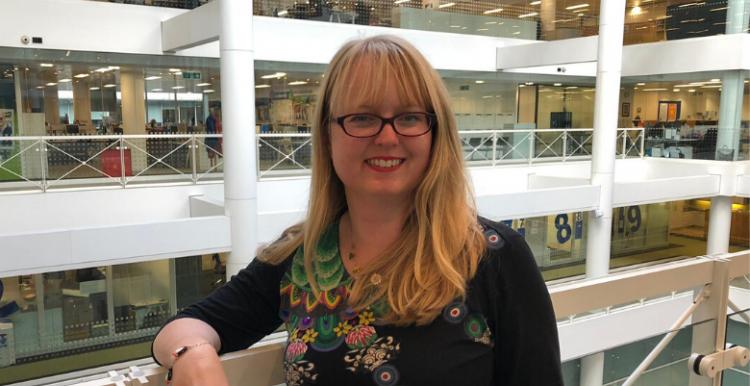
Marianne

A bit about my role

We support hundreds of you each year through our guidance and training events but we want to get better at providing this support and this is where my role comes in. 

As the new learning and development manager, I have been tasked with creating a programme that helps you build the skills you have told us are most important to you.  

Having spent three years managing Healthwatch County Durham I'm fortunate to have known some of you already and met even more of you during my first two months. 

I am also fortunate enough to have lots of information about your priorities thanks to all of you who completed our learning needs survey earlier this year. 

What can you expect? 

Our learning and development programme will focus on delivering what you need to run an effective Healthwatch.

Thanks to the feedback you have given us we know our programme for you should focus on: 

  • Induction 
  • Understanding the health and social care landscape 
  • Effective and creative models of engagement 
  • Leadership and governance 
  • Volunteer management 
  • Impact and influence 
  • Communications and marketing 
  • Research and report writing skills 

How will training be delivered? 

You have told us that you would like to see more training outside of London. We also know that our move to offer more webinars, online learning modules and toolkits so that learning can fit in with busy schedules has been popular. You can expect to see even more of this in 2020. 

Can you host training sessions for local Healthwatch?

If you have a central, accessible venue contact Marianne.Patterson@healthwatch.co.uk or hollie.pope@healthwatch.co.uk so that we can add you to our list of potential locations. 

How does this fit with our wider support? 

You may have heard that we have introduced a Quality Framework to help you demonstrate your effectiveness and showcase your impact. Our aim is to have every Healthwatch using it by March 2021. 

Our learning and development support will be aligned with the Quality Framework so that we are providing you with comprehensive support to do your jobs. I intend to use the Quality Framework to develop the learning and development plan, to make sure we have a comprehensive support offer, as well as continuing to use feedback from the network. 

What events and support do we currently have available?

  • Find out more about the different training sessions that we have available here. We have training in different areas of communications, network meetings to share ideas and stay up to date with what's happening across the country, and CRM sessions to help you use this in the best way possible.
  • We've a range of written guidance and resources available for you to use to support you in your job. We are constantly our guidance so be sure to visit this section of the site every now and then. 
  • We've a communications centre to help you develop branded products quick and easy.
  • There is a page for new starters to find out information about the different areas of support, as well as an induction module.
  • We launched our Making a Difference toolkit at conference and will be running five regional workshops looking at demonstrating impact, which isn’t always easy for a local Healthwatch as change isn’t always within our gift.

Are you signed up to Facebook Workplace? 

If you aren't yet signed up, contact hub@healthwatch.co.uk with your details so that you can be set up with an account. This is the easiest way to stay up to date with what's going on across the network. 

Learning and development you can take advantage of before 2020

We've had positive feedback about our online induction module, so do please share it with new staff and volunteers. We will be developing additional modules so be sure to watch out for those.

Our Policy team will be running a series of webinars, and some events, that cover various health and social care topics, and our Communications team have a whole programme coming up to help you with all aspects of communications and marketing. 

Our Intelligence and Analytics team are also developing their Research Governance Framework and training modules. From April 2020 we will try to have a complete programme for the year ahead to help with your forward planning.

Other areas that we will be working on will be:

  • to look at board governance for Chairs and board members
  • models of engagement
  • Enter and View guidance and training
  • volunteer management

That's it from me! If you have any questions, please do get in touch. I hope to meet more of you soon. 

Demonstrating individual and collective effectiveness: a new Quality Framework

During the consultation for Healthwatch England’s strategy, local Healthwatch asked us to explore how we can best support our network to demonstrate its effectiveness.

In response, we seconded Nichola Esmond, then Chief Officer with Healthwatch Wakefield, to develop a Quality Framework to provide a shared understanding between Healthwatch providers, local authority commissioners and Healthwatch England of the ingredients of an effective Healthwatch.

The framework consists of six domains:

  • Leadership and Governance acknowledges the importance of having clear goals and a rationale for our work priorities, which is vital given our wide remit and challenging resources. Strong leadership and governance help us navigate a complex environment whilst maintaining our independence and accountability.
  • The People domain recognises the key resource of Healthwatch: its Board/Advisory Group members, staff and volunteers who need the right knowledge, skills and support to deliver an effective, consistent Healthwatch service.
  • Sustainability and Resilience focuses on a business model that enables Healthwatch to plan and operate effectively, as well as adapt to the changing needs of the people we serve.
  • The Collaboration domain recognises the value of working collaboratively and in partnership, and of learning from other Healthwatch.
  • Engagement, Involvement and Reach focuses on the main statutory activities: how we go about reaching out to all sections of our community, gathering people’s views, providing advice and information and involving people in our work.
  • Finally, Influence and Impact focuses on our purpose: the difference we make by ensuring those in charge of health and care services hear people's voices and that their views shape the support they need.

The framework has been designed to be used on a self-assessment basis. Each domain consists of a series of questions and prompts where Healthwatch are asked to comment and provide evidence to demonstrate their effectiveness.

Over the past four months, Healthwatch have been testing the framework. Some have used it as part of their annual review and business planning process, bringing together Board/Advisory group members, staff and volunteers to reflect on and celebrate their effectiveness and identify areas for improvement. Others have used the opportunity of a new contract to think about what they need to put in place to be effective. There are Healthwatch who have met with their local authority commissioners to use it as part of their contract monitoring process. Some commissioners have specified the use of the Quality Framework in new contracts, having heard our plans for full rollout in 2020/21.

At Healthwatch England we’re looking to develop tools to help you use the framework. First up is the Making a Difference Toolkit, created following a request from local Healthwatch, this has been designed to help you demonstrate the impact you’re making. We also intend to analyse all the completed Quality Frameworks to understand the overall effectiveness of our network, inform our support offer and target our resources. We also plan to design our learning and development offer around the framework, identifying and sharing best practice from the network.

We’re grateful to the Healthwatch and local authorities who have helped develop and test the framework over the last four months. We now want to pilot its implementation and are looking for about 30 Healthwatch to complete the Quality Framework with evidence before March 2020. We will be offering 1-2-1 support to help you complete it, as well as consulting at Conference on any other support you might need.

If you are interested in hearing more or would like to be considered as part of the implementation pilot, please get in touch with your regional manager (Olly Grice, Alvin Kinch or Julie Turner). In the meantime, take a look at this one pager for more information about the Quality Framework.

Find out more
Our plan for Volunteers' Week 2019

Volunteers' Week is a great opportunity for us to thank Healthwatch volunteers and encourage more people to get involved with our work.

Our plan

To help you plan your communications, have a look at what we’re doing for Volunteers’ Week and how you can take part.

Saturday and Sunday 1-2 June

Theme: ‘How are you celebrating?’ – share your pictures on social media and the NCVO will share them.

What we're doing: We want to share your photos of Healthwatch volunteers. You can schedule these photos in advance by using social media manager tools. Don’t forget to tag us!

Monday 3 June

Theme: Launch party on Twitter 11am-12pm

What we’re doing: We’re publishing a blog, thanking volunteers from across the Healthwatch network and highlighting the different ways people can get involved.

If you’re planning to publish a blog post thanking volunteers, make sure you share it on Twitter during the launch party, using the hashtag #VolunteersWeek. If you have a volunteer who would be willing to be featured, let us know.

Tuesday 4 June

Theme: Corporate and skilled volunteering day

What we’re doing: We want to showcase examples of people who have volunteered with Healthwatch through Corporate Social Responsibility schemes or who work in local businesses. If you have anyone who would be willing to be featured in a blog post, let us know.

Wednesday 5 June

Theme: Youth volunteering

What we’re doing: We’re publishing a blog focusing on young volunteers. If you have students or young people volunteering with you, why not use Wednesday to thank them for their contribution.

To help you tell a strong story, have a look at our guidance.

How to tell a strong story

Thursday 6 June

Theme: Wellbeing and impact day – volunteers talking about the benefits of volunteering

What we’re doing: We’re publishing a blog focusing on what people can get out of volunteering. This is a great opportunity to focus on the benefits of volunteering for individuals, instead of the benefit to the organisation.

Friday 7 June

Theme: Share on social media how you’ve been celebrating this week

What we’re doing: We’ll round off the week by sharing content we’ve published and posts you’ve tagged us in.

Press release template

We've also put together a template press release for you to use during Volunteers' Week. You can can download and edit this by going to Workplace.

Go to Workplace

More information

We've based our communications plan on the themes put together by the NCVO, who run Volunteers' Week. Take a look at their website for more information, resources and events happening across the country.  

If you have any questions, potential case studies or ideas, let us know by emailing hub@healthwatch.co.uk

More information on Volunteers’ Week

Dementia Action Week: Help create dementia friendly services

You can help make health and social care easier for people with dementia to access. Find out how you can get involved, as part of Dementia Action Week.
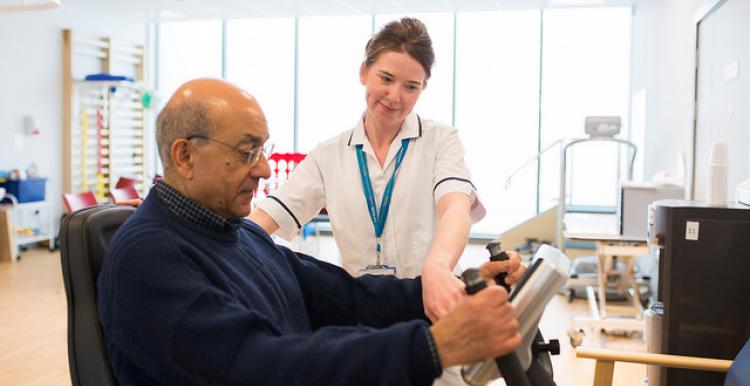
An older man in a blue jumper, being shown how to use a machine by a young female healthcare professional.

We often hear that health and social care services are unable to meet the needs of people living with dementia, and their carers. 

This was the case for George, who after being diagnosed, struggled to find support tailored to his condition. As a result, he started working with Healthwatch Shropshire to shape how services could better support people affected by dementia. For example, he helped establish the Butterfly Scheme, which sees medical staff pinning a butterfly to people’s notes to enable others to quickly and discreetly see that they have dementia. 

For many others, however, dementia friendly services don’t exist and people living with the condition are left to face it alone. Like George, we want to improve the care people with dementia receive across the country. You can help make a difference by getting involved with Dementia Action Week.

What is Dementia Action Week?

To create more inclusive communities, the Alzheimer’s Society launched Dementia Action Week. Each May they encourage people to raise awareness of the impact dementia can have, and of the need to make people with dementia feel supported. This could be by organising an information stand in your local supermarket or by running a Dementia Friends Information Session in your workplace.

Why are we getting involved?

Dementia is one of the greatest challenges that health and social care faces, but we often hear that services are unable to meet the needs of people affected by it.

Given the vital role that these services have in supporting the health and wellbeing of those living with dementia, we want to improve the care that doctors, nurses and other professionals offer, by training them to become dementia aware.

What are we asking you to do?

To do this, we are asking local Healthwatch to host Dementia Friends Information Sessions from Monday 20 – Sunday 26 May 2019. You can either:

  • Invite local health and care staff to an event, where they will be trained by a Dementia Friends Champion from the Alzheimer’s society
  • Or, become a Dementia Friends Champion and deliver the training yourself

By hosting these sessions, Healthwatch will be helping to create a network of health and care professionals, sensitive to the individual needs of those affected by dementia, therefore improving their experiences of receiving care.

How can you arrange your Dementia Friends Session?

You will need to have a group of ten people to host your Dementia Friends Session.

More information and book your session

Six reasons to use our CRM

The CiviCRM enables us to share information effectively across the network. Here are six reasons how your work can be made easier thanks to the the CRM.
Three people from the healthwatch network smiling.

1. Manage event

  • Event templates
    Create and manage templates to allow you to set up future events quickly and easily.
  • Simple sign-up
    Keep the sign-up process simple with online registration forms and automated confirmation emails for attendees.
  • Manage participants
    Keep track of who has attended your events. You can import data from other systems and export information easily too. 
  • Send reminders
    Send automatic email reminders to your attendees before the event. Make people feel valued with a follow-up thank you email too.

2. Produce reports

  • Evaluate
    There are over 20 pre-built reports to help you evaluate your impact. 
  • Customise
    There are a number of ways you can customise a report to suit your needs. Save your changes as a template so you can easily re-run the report another time. 
  • Automated reports
    Set up reports to be automatically be run and sent via email to a number of recipients.

3. Support your volunteers

  • Recruit
    Keep on track with the status of a volunteers recruitment process by updating their record with DSB checks, references and photography consent on the CRM. 
  • Record
    Capture your volunteer’s preferred hours and interests to save your own time when delegating tasks and managing resource. 
  • Manage
    Help measure the impact your volunteers make by logging and reporting on how many hours your volunteers donate to you and how.

4. Email marketing

  • Design
    Make email marketing quicker and easier by creating templates for your campaigns. Personalise emails through contact details already stored in the CiviCRM. 
  • Evaluate
    Assess your impact by understanding more about how people are interacting with your emails. Keep track of open rates, click through rates and unsubscribes. 
  • A/B Testing
    Test and learn more about what works best by trying different types of content with your chosen audience to see what triggers the best response. 
  • Tailor your emails
    Send email newsletters to different groups of people based on their interests and needs. 
  • Schedule emails
    Set emails up to automatically send at a specific time. Choose a time that they’re most active using the results from your previous campaigns and increase your chance of a good open rate.

5. Manage contacts

  • Record
    Keep a record of the latest communication with your contacts. Event registrations and email marketing is recorded automatically.
  • Manage
    Group, tag and create connections between individual contacts and organisations. 
  • Create
    Make a new mailing list from your contact database and send them your latest news via email or post.
  • Report
    Find out who has received and opened your recent mailings and download them into a report.

6. Project Management

  • Track
    Find out what the latest activity has been on a specific issue and what’s been scheduled next.               
  • Record
    Keep note of when you’ve had a face-to-face meeting or a phone call with an individual. 
  • Assign
    Assign a colleague a task using the CiviCRM to keep the case on track.

Do you have a question?

If you have a question about the CRM just get in touch. 

Get in touch