Digital transformation update: A renewed focus on data standards
Over the last year, we have been reviewing our digital systems to improve our offer to local Healthwatch.
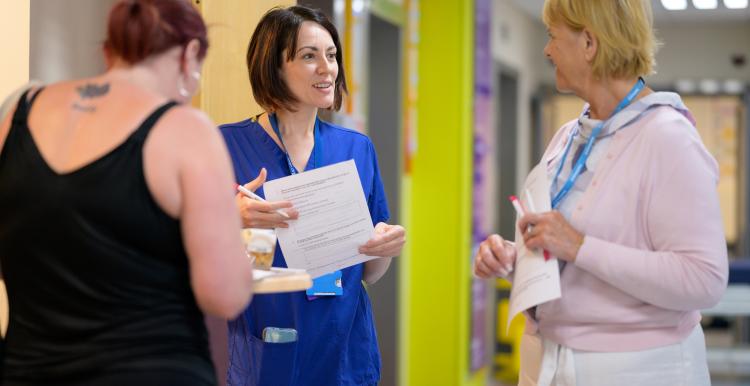
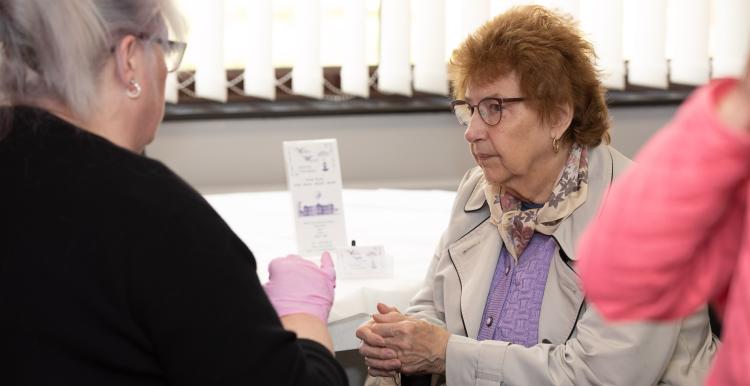
An elderly woman is listening to a therapist speak. The therapist is pointing to a leaflet she is holding

A key finding from this project is that we need to undertake a programme of work to refine data standards both at Healthwatch England and across the network. 

With Integrated Care Systems (ICS) moving to a statutory footing, finding a degree of commonality in data standards across will be increasingly important in how we feed insight back into the health and social care system. 

What do we mean by data standards? 

To collect data from the public and share this insight with others, we need to ensure that we have all the right policies and procedures, particularly in gaining people’s permission in using the experience they’ve shared.  

Under the ICS structure, there will be a heavier focus on collaboration within and between the different ICS 'patches'. To help with data sharing on a regional and national level, we must ensure the information we collect is consistent with both each other and our key stakeholders, e.g., NHS England. 

Due to the nature of how Healthwatch was set up in 2012, each Healthwatch collects data in slightly different ways, using a diverse range of systems, and all with varying levels of staff resource. While we have already worked with some of you to develop a revised taxonomy, our latest engagement has found that there is work needed to ensure that vital information is collected but is flexible enough for each Healthwatch to use. 

What do we plan on doing about it? 

Long term, our objective is to: 

Ensure that we are receiving robust and valuable data across the Healthwatch network regularly, allowing us to provide valued insight back into the system on a local, ICS, and national level. 

But before we do anything, we need to get the basics right. This means: 

  • Reviewing our current guidance and policies at Healthwatch England and our guidance via our network site and training. 
  • Ensuring that we have common data standards across the network, from our policies to the data we are collecting, to how we record this, i.e., the taxonomies that we're using, demographic data collection. 
  • Getting buy-in from commissioners to include basic data standards in contracts, helping Healthwatch to work together 

Stay up to date 

We have created a Workplace group specifically for this piece of work to keep you up to date. It won't be an overnight change, but we do want to keep you posted with the progress we're making along the way and get insight from you as to how we can improve together. 

 Join the group

An update on our digital / data sharing work so far 

Engagement platform pilot 

Over the last six months, several local Healthwatch has been trialling two platforms – Engagement HQ and CitizenLab - that aim to engage with people via online participation and make the analysis of this easier.  

After looking at the pilot results, we have decided not to progress with the procurement of either platform due to the amount of resource required from a local Healthwatch in setting up the new platform and recruiting participants and maintaining the engagement on yet another system. Registration was also a significant barrier on both platforms. 

CiviCRM 

Since we need to focus on improving our data standards before we can recommend alternative systems to the CiviCRM, we will not be looking to move away from the CiviCRM until at least March 2023. 

In the meantime, we will be speaking to the network to find out more about how you work, the systems you use, and build on these processes. We will constantly review our findings along the way and keep you up to date with our progress and recommendations via the Workplace group

Local Healthwatch websites and development 

We are currently working with our first couple of Healthwatch in the website upgrade from Drupal seven to Drupal nine. We aim to make this move as pain-free as possible, with the Communications Team working hard with the developers to automate most of the website migration. 

We will work with a small group of Healthwatch each month to move them across to their new site. We aim to have all Healthwatch who are using the Drupal seven template moved over by the end of 2022.  

We are not currently taking on any new websites. If you would like to be put on the waiting list for 2022, please contact digital@healthwatch.co.uk

Central Data Store 

We continue to build one central place that data can be stored, and comparisons made across the network. With the taxonomy being crucial to the success of this platform, we are focusing on making it a safe and secure place to store data, and improving our standards and policies, before this becomes a network-wide product.  

Survey tool 

The Healthwatch involved in the pilot, and Healthwatch England, continue to have access to Smart Survey until November, so we will continue to review its performance, ready for a full report of learnings towards the end of the year. 

While this system looks like it could be a useful platform for local Healthwatch we won’t be rolling out any new platforms until we have completed the vital work on data standards already mentioned. 

We’re at Healthwatch Week 

We will be at Healthwatch Week on Wednesday 10 November. Join the session to hear about the latest progress with this piece of work and a chance to ask questions.  

Can’t wait?  

Post your question in the Workplace group or email digital@healthwatch.co.uk  
What’s in the COVID-19 winter plan?

The Government has published plans for tackling COVID-19 this autumn and winter. Our policy advisor Bren explains what's in the new plan.

This week, the Health and Care Secretary announced the COVID-19 Response: Autumn and Winter Plan in the House of Commons. The Government have released details of their initial plan (Plan A) and backup plan (Plan B) should it be needed. 

What does the plan focus on?

Plan A covers five key areas: 

  1. Building our defences through pharmaceutical interventions 
  2. Identifying and isolating positive cases to limit transmission 
  3. Supporting the NHS and social care services 
  4. Advising people on how to protect themselves and others 
  5. Furthering the international approach: helping vaccinate the world and managing risks at the border. 

Building our defences

This area will focus on: 

  • Increasing uptake of the vaccine 
  • Offering booster doses to people more at risk from COVID-19, such as:
    • Those living in residential care homes
    • All adults aged 50 years and over
    • Frontline health and social care workers
    • Everyone aged 16 to 49 years with underlying health conditions that put them at higher risk
  • Offering the first dose of vaccine to 12-15-year olds.

In addition, the development of new treatments, such as anti-virals, will provide additional options to support people.  

Limiting transmission 

The importance of testing, tracing, and isolation for those who have COVID-19 will remain to help identify asymptomatic cases and prevent the spread of the virus. 

PCR tests are available free of charge over autumn and winter. The Health Secretary said that they Government "Will review the regulations and support by the end of March 2022."

Supporting the NHS and social care 

The recent announcement about an additional £5.4 billion in funding for the NHS over the next six months includes £50 million specifically for research on long COVID. The study will help better understand the causes and potential treatments. The plan also confirmed that the availability of long COVID clinics and services would continue to expand.  

The plan also includes a commitment to reviewing guidance for people who are clinically highly vulnerable. However, it does not cover the issue of people who may be unable to benefit from vaccination. 

To ensure that the NHS is not overwhelmed, there will be a focus on promoting the flu vaccine. 

Public advice and information

There will also be a strong focus on promoting public behaviour that helps to reduce the spread of COVID-19, including: 

  • Letting fresh air in if you meet indoors.  
  • Wearing a face covering when you're in crowded or enclosed settings. 
  • Getting yourself a test and self-isolating when required.  
  • Trying to stay at home if you feel unwell. 
  • Washing your hands with soap and water or use hand sanitiser regularly. 
  • Download the NHS COVID-19 app to know if you've been exposed to the virus. 

Employers will still need to follow the Working Safely guidance. The plan also encourages businesses to:

  • Consider using the NHS COVID Pass, although this is not compulsory at this point, and
  • Ensure your office is well ventilated, and further guidance will follow. 

Our international approach

The plan also looks at our international approach and how the Government intends to manage risks at the border and help vaccinate the world. 

The Government will set out a revised framework for international travel, which will be published before the next checkpoint review at the beginning of October.

Want to know more about how to stay safe? 

Learn more about the steps you can take to keep people safe as you return to the office and restart face to face engagement now that restrictions have been lifted. 

Find out more

What other steps could Government take?

Additional actions 

A Plan B may come into play if the NHS comes under pressure. The measures include: 

  • Communicating clearly and urgently to you that the level of risk has increased and that you need to behave more cautiously. 
  • Introducing mandatory vaccine-only COVID-status certification in specific settings (including all nightclubs and indoor settings with more than 500 people and outdoor settings with more than 4,000 people and any setting with over 10,000 people).
  • Making face coverings a legal requirement in specific settings, with precise conditions to be determined. 
  • Asking you to work at home to help reduce transmission.

What support is there for local areas?

The Government will also continue to support your local areas with: 

  • The COVID-19 Contain Framework, which clarifies the national support and infrastructure available to local authorities. 
  • National support for enhanced response in areas with particularly challenging disease situations, including targeted surge testing, vaccination logistical support, logistics support, and national funding to enhance local communications efforts.  
  • The Education Contingency Framework, which covers schools and childcare. 

As part of the approach, various pieces of legislation will be extended to 24 March 2022, subject to Parliamentary approval. 

Read the plan in full

Visit the Government website to read the COVID-19 Response: Autumn and Winter Plan 2021 in full.

Find out more

How can we make our information as accessible as possible?

Find out what we are already doing to help you make Healthwatch communications accessible, as well as the additional steps we are planning.
Female volunteer standing in front of a Healthwatch tablecloth

Clear, accessible information is essential to helping people make decisions about their health and care and get the most out of services. Last month, we told you about our campaign to look at accessible health and social care information. We also said it was an excellent opportunity to see what more we can do to make our communications accessible. 

Here we look at what steps we have already taken and how we plan to build on these.

Making sure we have the right policy in place

Although the Accessible Information Standard only applies to health and social care services, we will be reviewing our policy to ensure our information is as accessible as possible. We will also provide guidance and templates for you to use to improve the accessibility of your own materials.

The areas we plan to review includes:

  • Our accessibility policy and providing you with a local version you can use
  • Easy read training and resources for the network
  • Additional accessibility guidance
  • Making sure our information is digitally accessible

Digging into the details

Easy read support

We already produce some core documents in an easy read format, but we also started to provide easy read training for you this year. The training has been extremely popular, so as well as putting on further events, we will review how we can make this training more accessible and what other resources will make it easier for you to produce easy read publications. These resources could include easy-to-read pictures and definitions of terms to use in your easy read materials.

View easy read training dates

Digital accessibility

An external company has already tested the current Healthwatch national and local website template to meet the international Web Content Accessibility Guidelines. The current template is AA compliant.

We also introduced the ability for any content on the national and local websites we support to be translated by users into a language of their choice should they not speak English fluently.

The Web Content Accessibility Guidelines are being updated, with the amendments due to be announced in the Autumn 2021. We are also in the process of upgrading our website template and so will test our national and the local website template to make sure we continue to meet digital accessibility standards.

Read our website accessibility guidance

Brand accessibility

As part of our brand refresh, we have tested our new messages and information about Healthwatch with the public to ensure they are clear and easy to understand. We have also produced a new tone of voice that encourages us all to communicate in a clear, easy way for our audiences to understand.

As we strengthen the visual side of the brand, we are continually testing the concepts to ensure we only develop visually accessible options.

As we roll out the updated brand, we will produce new documents and videos on who Healthwatch are and what we do. We will ensure that these are available in accessible formats, such as easy read, British Sign Language versions of the videos and translated into different languages.

Learn more about our brand refresh

Guidance to help you

We currently have several guidance documents to help you ensure your communications are as accessible as possible. We will review all these guidance documents, update them, and provide more to cover any gaps we find over the next few months.

Current guidance we have available includes:

Sign up to our accessible information campaign

In January 2022, we are launching a campaign to understand the issues people face when receiving clear, accessible information about their care. It will also look at whether services are delivering the Accessible Information Standard.

We will then encourage services to implement changes in both policy and practice to improve the accessibility of their information.

As part of this campaign, we will be asking the public:

  • Are you aware of your rights to accessible information?
  • Are services delivering what you expect?
  • Do the rights you have go far enough?

Sign up to learn more about the campaign

Identifying outcomes and talking impact

The Impact Programme is helping you ensure your engagement and research activities lead to positive improvements in people’s health and wellbeing while better communicating to commissioners how this benefits people’s lives.
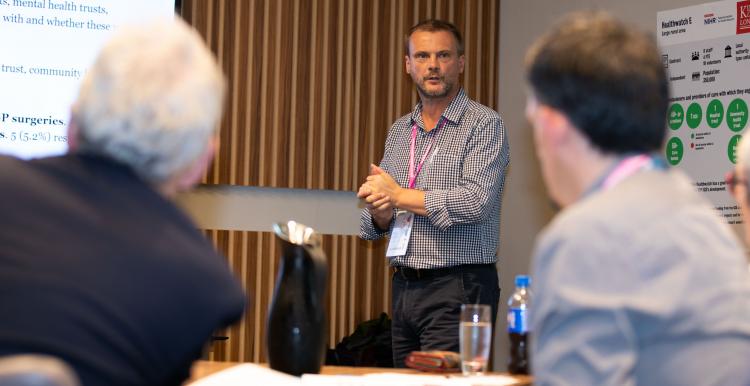
Man stood in front of a room of people giving a talk

Healthwatch is about listening to people. But listening for listening’s sake is not enough.. Feedback has to lead to change. 

Our brand messaging puts impact front and centre because:  

  • It builds trust with local people, including those whose voices are not being listened to, by showing that sharing their experiences with us is worthwhile. 
  • It increases the trust of local partners and makes it more likely they will act on what the public has told us. 
  • It demonstrates to our funders that we provide value for money. 

Helping you show your impact

We recognised the value of using a Theory of Change model to underpin planning processes early on. It formed the foundation of our Making a Difference Toolkit which was developed and tested by ten grant-funded Healthwatch. 

We have developed a range of other resources for the network, including a popular impact tracking spreadsheet to help a Healthwatch team log and follow-up on anticipated outcomes. 

“We’ve found all the related templates and guidance to be invaluable to our team.  They are easy to understand and give us a complete journey from theory, to concept, to delivery, to finished report and influencing.  We feel we have a much more professional approach, and this has helped us when collaborating with other stakeholders … we are getting more organisations contacting us because of our efficiency. If only we had had these in 2013, we could have conquered the world by now!” 

Healthwatch Darlington

Between September 2020 and March 2021, 69 Healthwatch participated in Impact Programme workshops or received one-to-one support, with 78% confirming an immediate increase in confidence around outcomes and impact. 

“We all found it really helpful and definitely something we can use going forward for other pieces of work … it really makes sense now! Thanks again.” 

Healthwatch Rotherham

The difference we’re making together 

We see changes to how you plan, follow-up on and communicate about projects. Now also starting to use our new Planning guidance and checklist, there’s a far greater focus on outcomes and impact at every stage. Often the impetus to focus more on impact has come from completing the Quality Framework self-assessment. 

Reviewing this year’s annual reports showed how far things have progressed. Following conversations we’ve all had about attribution and language around outcomes, there’s been a noticeable increase in confidence around taking credit for positive changes achieved for service users. 

We worked collaboratively with the CCG to successfully secure funding which will establish new mental health support teams within schools providing more early intervention and low-level support for young people. This also means more support can now be offered to parent carers. A new parent peer support group is being implemented in the coming months.

Healthwatch Darlington Annual Report 2020/21

The recommendations from our 2019 report on young people’s oral health have been reflected in the 2021 Oral Health Strategy. This includes recommended actions of:- 

• Integration of oral health into targeted home visits by health/social care workers 
• Supervised tooth brushing in targeted childhood settings 
• Targeted peer support groups/peer oral health workers 
• Healthy food and drink policies in childhood settings 

Healthwatch Blackburn with Darwen Annual Report 2020/21

I’m excited to see even more achievements with next year’s reports, where hopefully the benefits of our Impact Tracker will be further realised. 

Our conversations with local authority commissioners of the service confirm that they very much support this increased focus on outcomes. Whilst they understand that sometimes delicate stakeholder relationships can make it difficult to shout about impact, there’s no escaping the need they see to help ensure people can pinpoint how Healthwatch has contributed to improvements to services. 

Get involved 

I share your perspective that, ultimately, the Impact Programme is about the sustainability of the Healthwatch service. With emerging Integrated Care Systems, we will also need to demonstrate our collective impact at this level. 

If you've not already, please do make full use of the impact resources. Look out for more coming soon! It’s also really crucial to ensure your website demonstrates your impact, and we’re working now to revise that template page on our platform. 

If we can successfully articulate the full cost-benefit of a strong Healthwatch service, then I know we can be confident about what we have to offer and have a stronger case for support. 

Get in touch 

Want to know more? Just get in touch with me or your Regional Manager. 

jon.turner@healthwatch.co.uk

Why it’s time to change the way we collect demographic data

With a need to record demographic data to better understand people’s experiences of care, we’re making changes to the CiviCRM and advising all Healthwatch to use our demographic taxonomy to achieve greater consistency and impact in data collection.

We’re changing the way we are collecting demographic data and asking you to do the same.

Why?

Collecting quality demographic data helps us understand how personal characteristics affect people's experiences of health and social care, both within local areas and at a national level. 

It also allows us to identify health inequalities and gaps in support for particular groups of people. For example, the COVID-19 pandemic highlighted the importance of understanding this data in helping determine whether a personal characteristic such as age, ethnicity, or sexual orientation has affected the experiences of health and care. 

 We’re asking you to:

  • Collect more information about people’s personal characteristics where possible
  • Move towards using the demographic fields we recommend

From a local perspective, these changes will better help you to:

  • Understand if your research is representative
  • Track trends in your own work over time
  • Make comparisons more quickly using external data sources
  • Make specific and targeted recommendations for services to improve

Why it's important to collect demographic information

Find out why demographic information is important, more about how we're going to support you an other FAQ's. 

Find out more

Healthwatch England demographic fields

The Healthwatch England Research and Insight team, working with the network have revised the demographic fields currently used in the national reports library and CiviCRM to be more complete, in line with best practice.

Our taxonomy covers the ten personal characteristics. 

  1. Age
  2. Gender/gender identity
  3. Sexual orientation
  4. Ethnicity
  5. Religion or belief 
  6. Marital and civil partnership status
  7. Pregnancy and maternity 
  8. Disability 
  9. Long-term condition
  10. Carer

See the details of the taxonomy

This year we'd like to see a step-change in the amount of demographic data collected with feedback. 

We know it will be challenging to collect in some circumstances; for example, collecting demographic information from emails and social media is rarely or never possible.

We also don't expect you to collect all the demographics for every case. At a minimum, it would be helpful to ask people about their age, gender and ethnicity.

Helping you to collect demographic data

Listening to what you told us during our recent webinars run with Healthwatch Tower Hamlets, we now have a good understanding of the barriers you face when asking for demographic data. We are producing some guidance to support you to:

  • Better explain the reasons why it's crucial to collect this information
  • Weave some of the demographic questions into conversations
  • Deal with tricky questions

What this means for you

If you use the CiviCRM system provided by Healthwatch England

We will apply the changes to your CRM system on 1 October

After this date, you will need to ensure that you:

  • Tick the relevant demographic fields using the checkboxes in your CRM reports. 
  • Update your feedback cards to include at least age, gender and ethnicity.

If you use your own data collection system

You will need to update how you collect data to include the changes outlined in the demographic guidance. Making these changes will help you spot trends in experiences, compare them to regional and national data sets and draw better conclusions. 

You may need to update feedback cards or forms to include at least age, gender and ethnicity.

For questions or more information, contact the Research Helpdesk at research@healthwatch.co.uk.

Are these demographic changes going to be mandatory?

Listening to what you've told us, we are not making these changes mandatory at this stage. We appreciate that this might mean a significant shift in how you collect your data and how you report. We want to make sure you're well supported in this change.

What will happen to the demographic data that is already in the CiviCRM? Will this be lost?

The existing data that you have collected will automatically map to the new fields on 1 October.

Take a look at the complete list of the new demographic categories in the CiviCRM

Need support?

For questions or more information, contact the Research Helpdesk. 

Get in touch

Check out our new brand values

Find out about our new brand values, as well as the steps we'll take this year to strengthen our brand further.
A white woman is smiling as she talks to a black woman at an event

In January 2021, we kicked off work to improve how we engage our audiences by updating our brand personality, values and proposition. Today, we are delighted to share this work's results by launching our new brand beliefs and values.

Why is this work important?

We all share the same brand, and it should reflect a clear sense of who we are, what we believe and what we are working to achieve. This is why we commissioned a brand agency to help us articulate our purpose, personality and values in a way that resonates with those we support and serve. 

Thanks to over 100 staff and volunteers who took part in workshops, we developed a clear articulation of our brand. We then tested this output with the public, our national and local stakeholders. 

The results were more positive than we could imagine, with over 9 in 10 Healthwatch staff, volunteers, board members and leaders rating our new values as either highly relevant or relevant. 

What do we believe and value?

Our beliefs

  • We believe that health and social care providers can best improve services by listening to people's experiences.
  • We believe that everyone in society needs to be included in the conversation. Especially those whose voices aren’t being listened to.
  • We believe that comparing lots of different experiences helps us to identify patterns and learn what is and isn't working.
  • We value the insight that's gained from analysing many different people’s experiences to learn how to improve care.
  • We believe that we must always remain independent and impartial while working with partners to get things done.

Our values

Listening: We recognise the value of listening to people and making sure their voices are heard.

Including: We value inclusivity. Listening to the first-hand experiences of diverse groups improves care for everyone.

Analysing: We value the insight that's gained from analysing many different people’s
experiences to learn how to improve care.

Acting: We act on feedback and drive change. Listening has to positively affect
outcomes and influence important decisions about people’s care.

Partnering: We value strong partnerships with care providers and Government –
serving as the public's independent advocate.

Read our brand beliefs and values on a page

Help to adopt the updated articulation of our brand

Over the coming weeks, we'll roll out resources to help you adopt and use the new brand proposition, values and personality in your work. 

These resources will include:

  • Our messaging matrix, which will provide you with the brand proposition, values, tone of voice, and messages for each audience;
  • A language guide and training to help you apply our personality when you write; and
  • A checklist you can use to embed the brand personality and values in your work.

What else can I expect in the next 12 months?

We'll also be talking to you about what improvements we can make to the visual side of the Healthwatch brand. We are not planning a rebrand or to change the logo, but from your feedback, we think there are steps we can take to align our visual brand with our new personality and make it easier for you to use. We expect our updated visual guidelines to be ready this Autumn, after which we will update the Trademark Licence Agreement that every local Healthwatch signs to reflect the changes we have made. 

Got a question?

If you have a question or are interested in getting involved in our work on the visual side of the brand, please talk to me – Ben Knox, or Tima Moledina who is leading on this work.

An update on our Digital Transformation work

Take a look at our work to improve Healthwatch’s use of digital systems since January, and help us understand your digital needs in a post COVID world.

Understanding your digital needs in a post COVID world

In January we wrote a blog informing you about our plans for this year and how we’re looking to improve the use of digital systems across the network.

Thanks to your input in the Wildman and Herring user research via surveys, workshops, and 1:1 discussions, we were able to understand more about your needs around the gathering, analysing and management of data.

Since the user research in 2019, we’ve all been all hands on deck as we respond to the pandemic. As we emerge from the pandemic to a situation where (hopefully) face-to-face engagement can resume, we wanted to check back in with you to see if anything has changed about your working habits and use of digital systems.

We’ve put together a small survey to make sure that our digital plans remain on track to meet your needs. Deadline to complete: Wednesday 16 June.

Go to survey

What have we done so far?

In January we kick-started our Digital Transformation work. Here is an update on everything digital.

Click the links to be taken to the relevant sections.

Piloting new engagement platforms

We’re incredibly grateful for the time and effort spent by all the Healthwatch involved in our engagement platform pilot. We have six local Healthwatch trialling Engagement HQ and five trialling Citizen Lab.

The engagement platforms aim to encourage online participation with people through a range of new tools such as discussion forums and workshops and allow you to easily analyse qualitative data.

As a group, we’ve been testing the platforms to try to get feedback from people on their experiences of vaccines, with some local Healthwatch also using the platform for a variety of local projects such as understanding the maternity experiences of women from a Black, Asian or Minority Ethnic Background and a 360 feedback from stakeholders about the work of Healthwatch.

What are we testing?

We’re testing several different functionalities within the systems such as workshops, surveys, discussion forums, as well as analytical and reporting functions.

At the end of the pilot, each local Healthwatch will have completed a task list and survey to help us understand the suitability of the products we have tested. We will also be taking into account factors such as user experience and resource and capacity across the network to sustain the platform’s use to help in our decision on where we invest our resources.

When does the pilot end?

The pilot comes to an end at the end of July 2021, with the following month being used to gather feedback from the Healthwatch involved in the pilot before a decision can be made.

Building a new central data store

Development is underway to build a Central Data Store (CDS) i.e. a database so that there is one central place for Healthwatch England and the network to access data.

The user research showed that there was a need for a simpler taxonomy than what currently exists in the CiviCRM to help input, filter and surface data. It also showed a need for an automated way to capture and share data between local Healthwatch and Healthwatch England – and for all to be able to see and analyse this data once submitted.

The CDS will enable you to be able to analyse your data against a national data set, as well as benefit from in-built tools to help with your qualitative analysis.

Work in progress

There are several elements that we’re working on to make this possible, safe and secure including:

  • The build of the central data store itself.
  • Local Healthwatch dashboards that enable you to access your data and restrict the view of identifiable information and qualitative information specific to your area. Anonymised information will be available across the board.
  • Data visualisation – enabling you to compare your local Healthwatch with others on a local, regional and national level.
  • A refined Data Sharing Agreement to ensure that you are aware and happy with how the data is being processed and the security of the data that’s being collected.
  • Creation of a feedback module that links the central data store with the ‘Have your say’ form on the Healthwatch template website, reducing the need for double entry of data and saving staff time.
  • We are looking at the options for integrating any successful platform from the current pilot programs into the CDS, improving the amount of data available.
  • A more simplified taxonomy to help the filtering and comparison of data.
  • The input of historical data sets i.e. the reports library so that trends can be identified over time.

We aim is to get the beta version of the CDS available by early July. We will then move onto a phase of testing and refinements.

Survey tool

You told us that although essential for your engagement work, survey tools were a huge additional cost on your finances. The user research also said that the analysis of qualitative data was a huge drain on your resource and that often the survey tools didn’t have the functionality of offline inputting for when your staff and volunteers are out and about at engagement events.

We’re looking at how we can help meet these requirements, looking into survey systems that continue to be user friendly, but offer additional functionality at a more reasonable rate.

Local Healthwatch website upgrade and developments

We now have over 70 local Healthwatch using the new website template. Working with the network, we are continuing to make improvements from both a website visitor and a content management perspective.

Since January we have:

  1. Introduced a new ‘digital dashboard’ that will help people who use the Healthwatch website to see how their site performs against a benchmark of other Healthwatch sites. This will help highlight where you’re doing well, areas for improvement and allow for easier reporting on website stats for commissioners.
  2.  Made changes to the events function to improve people’s experience and make adding content more efficient.
  3. Worked with the network to identify a list of potential refinements to explore and then prioritise for the financial year.

At the moment, we’re working with our developer on the best approach to upgrade the sites from Drupal 7 to the latest version.

What’s happening to the CiviCRM?

The user research reported that a lot of you were unhappy with the functionality of the CiviCRM, with many of your reporting that it did not meet your user requirements.

We have paused all development work, apart from maintenance and bug fixes, on the CiviCRM as a result of this feedback while carrying out the pilots of the various systems we are testing. We are not offering any new instances of the CiviCRM. Once we have completed these we will decide whether or not we will continue to support the CiviCRM or choose to retire it.

Campaigning needs you - introducing the Campaigns and Communications Ambassadors Network

Do you lead on campaigns for your Healthwatch? Find out about our new communications network for staff and volunteers and how you can be involved.

Do you have a strong interest in communicating the fantastic work of Healthwatch to the public and our stakeholders and partners?

Do you want to help Healthwatch campaigns be the best they can possibly be, at a local, regional and national level?

Then our new Campaigns and Communications Ambassadors Network (CAN) is for you.

We are creating the network to link up staff or volunteers at all levels of seniority who generally lead on campaigns and communications for their local Healthwatch and want to help deliver campaigning activity and messaging in a more coordinated and impactful way. You don’t need any particular qualifications or job title – just real enthusiasm for raising Healthwatch’s profile and making more people engage with us.  

The CAN will provide a regular opportunity for you and your local Healthwatch to: 

  • Find out first about upcoming national campaigns to participate in  
  • Identify opportunities for collaboration between Healthwatch (both locally and with HWE)
  • Learn about innovation and best practice in the campaigns and communications disciplines
  • Help strengthen Healthwatch’s collective reach and profile

Why have we created CAN?

We already have an active communications group and regularly see most local Healthwatch supporting our national campaigns but we want to take this further by providing a forum to build campaigning skills, improve planning and encourage joint campaigns across the network. 

What is a campaign?

A campaign is a planned sequence of communications and interactions that uses a compelling narrative over time to deliver a defined and measurable outcome.

What commitment will be involved?

CAN will meet bi-monthly – with four of those six annual meetings providing learning opportunities, and additional opportunities for updates. We would ask CAN members to attend these meetings where possible but making each one is not essential (the first meeting is on 9 June - please find details here).

What we would ask is that CAN members do generally keep up to speed with the updates shared with the group and help your Healthwatch participate in coordinated campaigns and communications activity as you will be the named contact at your Healthwatch who we can update on campaign activity. We are fully aware of the staffing and resource constraints many Healthwatch face so as much or as little time you are able to devote to the network is fine.  

What else are we doing to raise the profile of Healthwatch?

The CAN’s creation comes alongside other work we are doing to strengthen the profile and impact of Healthwatch’s campaigning activity, including the identification of a network of selected Healthwatch media spokespeople. These individuals (generally chief officers and chairs who have previous media experience) will be our go-to representatives for regional media interviews relating to national campaigns.

We may also be able to offer opportunities on an ad hoc basis when the media approach Healthwatch England for spokespeople on particular topics or regional issues. We are planning to deliver some external training to help prepare those involved.

We are also planning a number of improvements to the Healthwatch brand and the resources we provide to you, to strengthen our ability to engage the communities we serve. 

How do I get involved?

You can sign-up to the CAN using our short online form. 

Sign-up 

To find out more about the CAN, email Chris Gorman, Campaigns and Regional Manager: chris.gorman@healthwatch.co.uk

We will also be holding our first workshop on 9 June, which will help delegates understand the key ingredients to plan effective communications and provide a platform to share learning, best practice and future campaign plans.

Running an effective Healthwatch - how we're working to support you

Read about the Quality Framework as Delana Lawson, Quality Assurance and Regional Manager (North East) shares its benefits and how it can help you in running an effective Healthwatch.
Healthwatch 2019 conference audience

It’s a fact that running a local Healthwatch is challenging. Resources are tight and many local Healthwatch are poorly funded, which makes fulfilling the role even harder.

Thank goodness for the dedication of our staff and the energy and the passion of our volunteers who we rely on to support many aspects of our work. It’s been a tough but rewarding journey for local Healthwatch with many successes despite the obvious challenges we face.

A big part of our role at Healthwatch England is supporting you. We do this by covering six key areas key to running an effective Healthwatch. These are identified in the Quality Framework.

What is the Quality Framework?

We worked with the network to develop the Quality Framework in response to requests from Healthwatch on how they can better understand their effectiveness and continuously improve their performance.

To make this framework as useful as possible, we also worked with local authorities to ensure it could be a useful tool to support outcome-based commissioning and delivery.

It also provides Healthwatch England with a consistent way of helping us understand the effectiveness of an individual Healthwatch and the network overall, which in turn helps inform how we can best support you.

Find out more

The story so far and next steps

Last year, we piloted the Quality Framework with 22 local Healthwatch. Since then, a further 47 have signed up to complete it. These are currently at various stages of completion.

As part of our business plan and strategy, we’ve set a target of all Healthwatch completing the Quality Framework by March 2022. This will help to show the effectiveness of the Healthwatch network and strengthen our case for funding both at a local and national level.

We have now approached each local Healthwatch about using the Quality Framework and to find out how we can best support you through this process.

Why should you complete the Quality Framework? 

So, what are the benefits of undertaking the self-assessment? How will it help you create/maintain a sustainable organisation that commissioners will want to continue funding sufficiently during challenging times?

Board members, paid staff and other volunteers have told us that doing the self-assessment has helped clarify what it takes to run a local Healthwatch for maximum effectiveness.

This includes many of the areas that all too easily can be taken for granted such as priority setting, managing your finances, supporting staff and volunteers, managing stakeholders, and showing your impact. Going through the self-assessment helps you put in place the legal ‘must dos’ of not only running an independent organisation but also fulfilling your statutory functions.

Healthwatch have reported that the process of completing the Quality Framework has provided an opportunity for Board members, staff, and volunteers to come together to discuss strengths and how individual roles contribute to the running of an effective Healthwatch. One Healthwatch reported that this has been the first time that they are working with a new cohort of volunteers and had them involved in the process and planning for where they want to be in three years.

Examples of outcomes achieved

Below you can see a snapshot of the types of outcomes that some Healthwatch have achieved through undertaking the Quality Framework. This is very impressive because it is only early days, especially when you consider the impact of COVID-19 on normal operations.

  • We have set up regular meetings with our CQC Area Lead, as this had not occurred in 2019! They have been a good way to share insights but has also led to meetings as issues have arisen, and I have now more contact with inspectors of specific services in the patch with good results. 
  • We are working more closely with Local Authority portfolio holders (old and new) such that we are now being asked to lead engagement piece on future place-based health/care.
  • We are now triangulating intelligence and feedback between the day-to-day activities (Feedback Centre, Information and Signposting, meeting and event attendance) and specific commissioned initiatives have improved. Activity is more joined-up now.
  • We have changed the way our Board works, with the introduction of non-exec members from the Voluntary Community Sector to increase skills and diversity. We have also reviewed our policies and procedures to make sure areas identified in the Quality Framework are strengthened and reporting to the Board is clear.
  • Our retention of both staff and Board members has improved as they more clearly understand the culture and values as well as the strategy and work program on which all our work is based.
  • We have more clearly defined how we use the Theory of Change which underpins the Operational Plan. It is used to develop projects in partnership with our stakeholders and supports to measure impact over time.

“This was a great opportunity to bring people unified and closer together. It strengthened relationships and understanding between individuals and strengthened the commitment to Healthwatch Northumberland.”

Healthwatch Northumberland

Learning from each other

We recently advertised a grant opportunity for Healthwatch who have undertaken the assessment to provide peer support to the network through developing case studies and featuring in future webinars.

This is a great opportunity for those Healthwatch who have taken creative approaches to implementing the self-assessment to share their learning and how their approach can be adapted by both large and smaller Healthwatch. It's important that we're able to learn from one another to identify opportunities and make the most of knowledge gained.

Our support to you

The Quality Framework has been divided into six domains with tools available if you need help in a specific area. We're also going to be providing additional guidance and tools about impact and equality and diversity to better support you in these areas.

Don't forget about our Learning and Development calendar that highlights opportunities throughout the year that can help build your skills across each domain too.

After the last year it has never been more important for Healthwatch to be able to demonstrate their value, so if you have not yet engaged with the framework, please do speak to me or your Regional Manager about how we can best support you through the process.

Get in touch

If you're in need of support, get in touch with Delana or your Regional Manager.  

Get in touch 

Where we are focusing our support in 2021-22

Find out more about where we are focusing our support to help us reach a high performing and sustainable Healthwatch network.
three women in a hospital completing questionnaires

Using the information you share with us through our Annual Survey, Satisfaction Survey, Learning Needs Survey and staff and regional networks, we have created our support offer for 2021-22.

Our support for you

Find out more about the support offered to local Healthwatch

Find out more

With our strategy launched last week, our support to you prioritises several areas to help achieve our three-year strategic objective of a high performing and sustainable Healthwatch network. 

Our priority areas are designed to strengthen our impact and, in turn, the case for support and funding of Healthwatch individually and collectively. This is increasingly important with the pressures the network is facing with reduced budgets. 

Our priority areas for supporting you

1. Demonstrating impact

The continued pressure on Healthwatch funding makes it even more imperative that you can demonstrate your value. 

With such a big remit, limited resources and the challenges of influencing, it is of little surprise that some local Healthwatch have asked for help with showing their impact.  

We will support you to plan, capture and communicate the difference you make by:  

  • Producing resources and tools to support you. 

  • Running webinars and opportunities to share examples from across the network. 

  • Providing 1-2-1 support for individual Healthwatch who request it.  

2. Equality, diversity and inclusion  

Equality, diversity and inclusion feature at the heart of our refreshed strategy for 2021-2023 and is core to our brand.  

Last year, we started work to better understand how the Healthwatch network is approaching equality, diversity and inclusion, the challenges and opportunities faced and how we can best support you, with the help of Joy Beishon, Chief Executive of Healthwatch Greenwich who we have seconded until September 2021. 

We will support you by: 

  • Helping your Healthwatch with Board diversity and its role in strategy and priority setting.  

  • Facilitating a peer network to support equality, diversity and inclusion. 

  • Offering workshops on developing an organisational culture that supports equality, diversity and inclusion and exploring what the public sector equality duty means for local Healthwatch. 

  • Providing resources to support your role of holding public bodies to account, including conducting equality impact assessments. 

  • Sharing learning and resources on how you can work with specific communities.  

3. Digital, data sharing and protection  

We rely on local Healthwatch sharing their insight to inform our work on shaping and influencing national policy. This helps meet the statutory requirement to assist us in our work.  

The work on the NHS Long-Term Plan, insight gathered during the pandemic and the recent spotlight on dentistry and access to GPs that made media headlines are all examples of the impact we can achieve together. 

We will support you by

  • Investing in new digital platforms and a central data store to make sharing your information easier. 

  • Providing access to analytical tools so you can compare your data with other areas.   

  • Enabling the network to collect data in a more consistent way, that helps us better understand who we are engaging and make analysing insight more efficient.  

  • Creating a Digital Fund to support Healthwatch with small grants to make any necessary adjustments to the digital systems we introduce.  

  • Developing new data-sharing agreements to help provide clarity about our respective roles.  

4. Healthwatch brand and reputation  

Upholding and protecting the brand is not only a requirement under the trademark licence issued by Healthwatch England but central to your reputation and demonstration of upholding the Nolan principles.   

We conducted a review of the brand, and hundreds of staff and volunteers helped develop new brand values that will be launched soon.  

Having a strong, consistent brand and the policies that underpin it is part of our work to protect Healthwatch funding and provide assurance to the public and stakeholders.  

We will support you by: 

  • Publishing new guidance and resources to help you better engage local communities, manage the brand and align the new values with those of your Healthwatch whilst recognising your independence.   
  • Updating the brand licence agreement and providing clarity on how you can and can’t use the brand. This will ensure as a network, we can better protect our reputation if our brand is used incorrectly.  

  • Providing a range of template policies and guidance materials that will help meet the requirements of the brand licence agreement. 

5. Running an effective Healthwatch 

The support we provide you covers six key areas. These areas are identified in the Quality Framework as the key ingredients for running an effective Healthwatch.  

The Quality Framework provides a consistent way for Healthwatch, local authorities and Healthwatch England to understand Healthwatch's effectiveness and support you to identify areas for improvement.  

It also helps us fulfil our legal function to have an opinion as to whether a local Healthwatch is able to carry out its legal functions properly.   

We will support you by:  

  • Working with you to find out the best way to support you by completing the Quality Framework if you haven’t already.  

  • Showcasing examples of Healthwatch who have already been through the process, what they learnt and how it’s benefited them through peer-to-peer learning. 

What we need from you 

To help us carry out our role at a national level, support you locally and make the most robust case to protect and seek funding, we need every local Healthwatch to: 

  • Share your insight and data with us 

  • Engage with network-wide initiatives to build our collective skills and improve the quality of the Healthwatch service 

  • Have the right policies in place to meet your statutory and legal obligations, and  

  • Protect and uphold the Healthwatch brand 

Refreshed Network website

We have given the network site a makeover with lots of new content. You’ll find support and resources to help you run an effective Healthwatch covering each of the areas of the Quality Framework:

  • Helping you lead and make decisions 

  • Supporting your sustainability 

  • Help to engage your communities 

  • Working together 

  • Showing your influence and impact 

  • Supporting your staff and volunteers 

You’ll also find key dates for your calendar, the latest grant opportunities and a calendar of learning and development opportunities.  

Got a question? 

We will be sharing more information on our plans for this year in the weeks to come but, if you have a question, please do get in touch with me or any member of the Network Development Team.  

Get in touch